

Speaking, as we were two weeks ago, of duration, for this issue I’ve been considering Cheryl Duvall’s recording of Linda Catlin Smith’s The Plains. This is the first release in a projected four-disc series of the Canadian composer’s complete works for piano. Duvall has long been a champion of Smith’s music, as well as that of many of her other fellow compatriots. Readers with long memories might recall me recommending her disc of music by Anna Höstman as something to look forward to in, ahem, 2020. I drew attention then to Duvall’s powers of concentration in Höstman’s 25-minute Harbour, and these were amply on show again when I saw Duvall perform the piece at a Music We’d Like to Hear concert in 2022.
But that is as nothing compared to the 67 minutes of The Plains. Smith’s piece is one of several hour-plus works Duvall has commissioned since 2019, playing obviously to one of her strengths as a performer, but also to that peculiarly Canadian fascination for following a wandering line to the point of getting lost. (See also Martin Arnold’s recent Flax, another mammoth solo, this time composed for Philip Thomas and premiered by Kerry Yong; Arnold’s encapsulation of this Canadian aesthetic as ‘slack’ has not been bettered.)
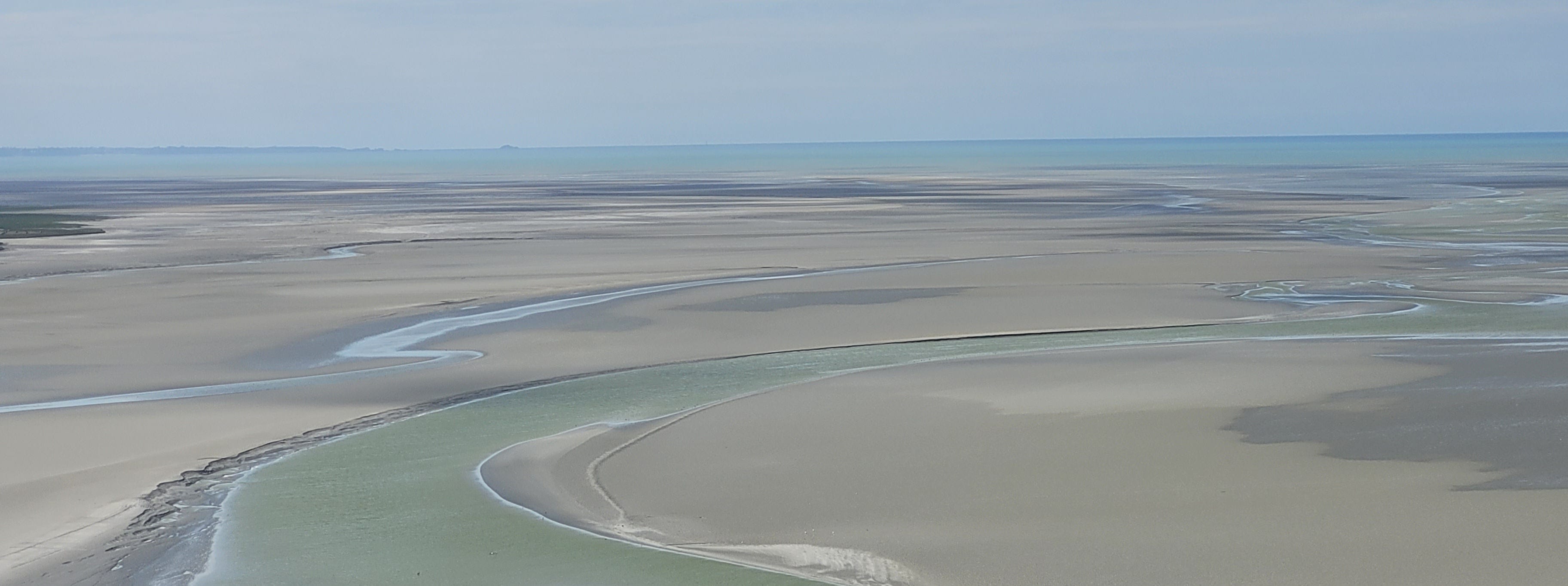
The Plains begins with solemnity, with certainty. Single notes, to a steady pulse, as though toying, warming up, but with deliberation, with purpose. Like an abstracted horn call or birdcall, a single high note is all that punctuates the space.
As it continues, the music seems to spread, flatly, vastly, like the plains of its title. Never featureless but never not in relation to the space between features. And while the temptation is to think of starscapes and constellations, the points are more rounded than that, not brightly distinct. This view is earthly; contained and connected. (Smith writes things that are almost melodies, almost harmonies, almost rhythms. Almost, but never quite.)
The composer talks of this piece as being like the plains in both its expanse and the objects it contains. ‘You might have a large field, but within that field, you might have flowers’, she told Canadian journalist Anya Wassenberg. Extending the metaphor, sometimes those features are novel incursions into the space, but just as often they emerge as the products of nature-like processes of change, like erosion or habitation. At any moment, all processes are objects. Or, on a large enough timescale, all objects are processes. One hour, in Smith’s music, is sufficient time to prove the point.
Interested in how a performer handles works of such duration – and what impact they might have on her own performance practice – I contacted Cheryl to ask if we could talk. We spoke over Zoom, she from her apartment in Toronto. As usual, the interview below has been edited for clarity and length.
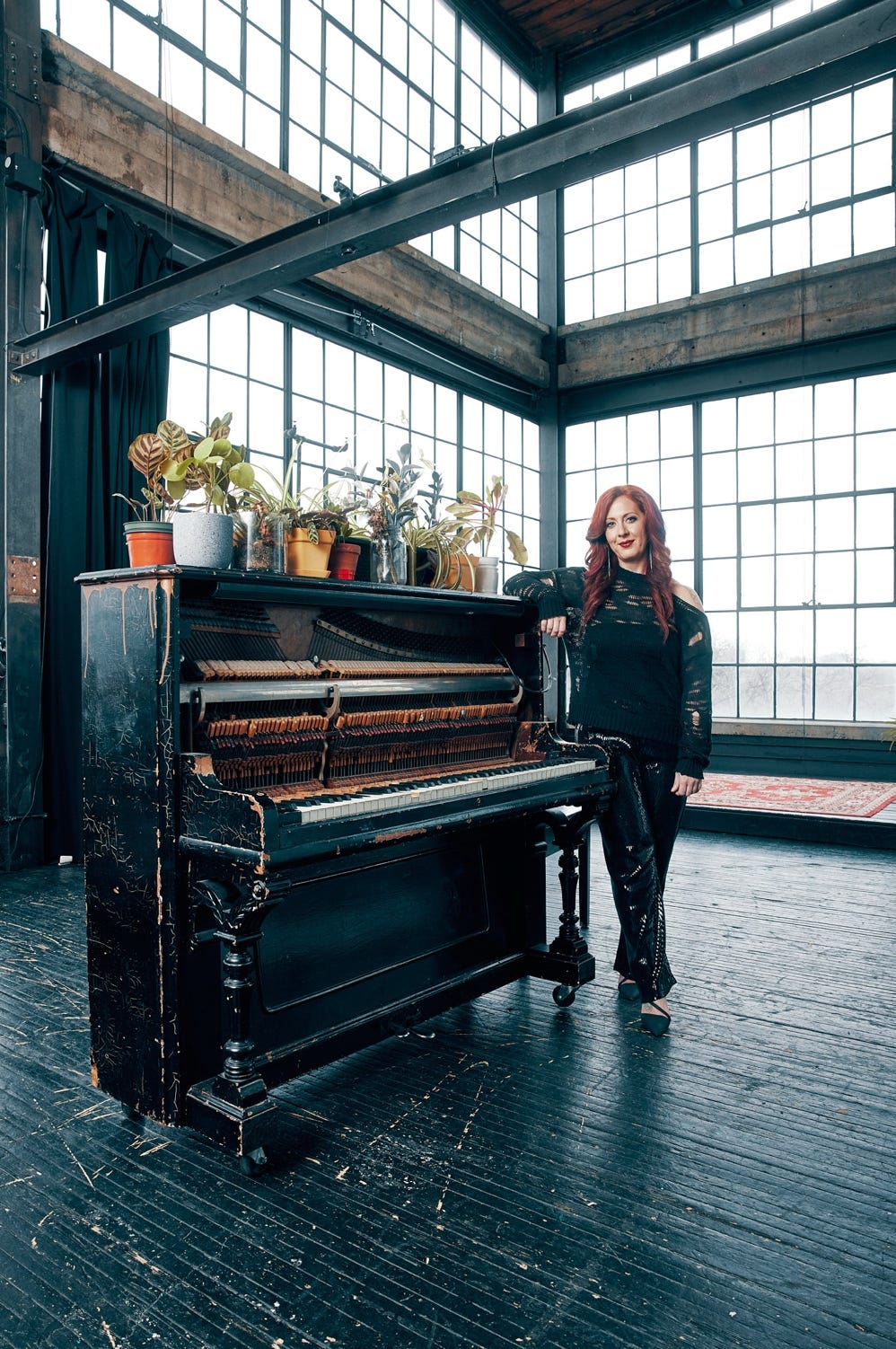
TRJ: Let’s begin with this project you’ve had since 2019 of commissioning hour-long piano pieces. How did that come about?
CD: Well, I had the opportunity to perform some already composed longer works, when I was maybe five years into my professional career. I performed Linda’s piece Ballad a number of times, I performed Feldman, Piano, Violin, Viola, Cello, I performed a piece called Thinking for a violin and piano by Maria de Alvear. And every single time I performed one of these longer works, I would feel like the time just would disappear.
Also, the feedback from the audience was always the same. It would be, ‘That was 75 minutes? It felt like 15.’ Or, ‘That was so short, what happened – how did all of this time disappear?’ So, I became fascinated with that experience. Just timelessness.
Or sometimes a piece can feel very long, too. And at other times it can feel very short. What is it that makes a piece feel long? What is it that makes the piece feel short? Is it the composition itself? Is it the performer? What is my experience? What is the audience’s experience?
I just got into that. And at the same time, it was a little bit of a rebellion against this shortening of the attention span. How everything became about clips, and thirty seconds of music had to be punchy and grab your attention. And I’m the opposite. I’m the kind of person that wants to sit in something and be bathed in it or immersed.
A lot of the impetus of the project came from this feeling of exploring the idea of time and how we experience it, and wanting to be more immersed in something. I was also talking to composers who were very tired of these seven-minute or fifteen-minute pieces, and feeling constrained within this. I guess, when you’re writing those pieces all the time, you have a system and you can’t develop the material in the same way.
TRJ: Yeah.
CD: You can’t let it spin out. There’s a limit, right?
The people who I was discussing this with were very interested. They had never done a longer work that allowed them to explore material without the same constraints. Also, it was a challenge for them to see how they could maintain a through idea for an extended period of time.
TRJ: Obviously Linda does have some very long pieces: there’s Dirt Road for violin and percussion [recorded for another timbre by Mira Benjamin and Simon Limbrick]. There’s Ballad, like you mentioned [played on this another timbre disc by Kerry Yong]. And there’s Dandelion for solo violin. There are some big things. But when you were coming to some of these other composers who maybe hadn’t written something of this scale, what was their reaction? And what are some of the ways in which they approached it?
CD: They were all intrigued and intimidated [laughs]. I think the reason why they wanted to do it was not only that it was an interesting idea, but I also feel like … I’m a person that likes to push my own boundaries, and a lot of the people that I worked with were also looking to challenge themselves, break out of their comfort zone and try something new and experiment.
I think there’s also an understanding that I have with a lot of people that not everything is a masterpiece. I mean, I feel like the pieces that I’ve got have been all really wonderful. But the process is just as important as the outcome. The exploration, the experimentation, the boundary pushing, I think, is the more important part of the project in a lot of ways.
TRJ: You mentioned Feldman, and there’s that famous line of his about the difference between form and scale, form being 20 minutes to an hour and scale being anything bigger than that. He never really explains what he means by that – I think I have an idea, but he never really gets into it. How do you interpret it? Do you feel a difference in terms of, say, something like Anna Höstman’s Harbour, which is big but it’s a 25-minute piece, and something like The Plains, which is over an hour.
CD: That’s a good question. I think one of the things that’s maybe similar with Harbour and The Plains is that they’re sectional. When I’ve spoken with Anna, she talks of, say, this one area in Harbour, which is maybe the stormy part, or then this other part is seaweed, and this is light trickling on this other part of the harbour.
With The Plains, I feel similarly. In the score, there are a lot of moments where there’s a double barline, or something where the tempo changes or there’s a new instruction – Linda uses a lot of things like ‘another vista’, ‘searching’, ‘still searching’. These descriptors for me create a new atmosphere or environment, a musical environment. And similarly with Harbour, Anna has a lot of that as well.
So, both pieces are very sectional, but there’s also a unification of the music in both of them, where material does come back to unify the length and the experience. But I think with Linda’s piece, there’s so much space that I just sink into that. And it doesn’t really feel that much longer than Anna’s in some ways, even though it is substantially longer.
When you’re performing longer works, you need a longer kind of concentration, it’s just a different kind of sinking into the music.
TRJ: It’s as though the phrase lengths are on a much bigger scale. I was listening to it this morning; you have that opening section where it’s lots of – I don’t know if they’re quavers or crotchets – but just repeated, pulsing notes. And that’s obviously a motif for the first section. But that bit is ten minutes at least: it’s the length of a piece in itself, but here it’s just the first thing we do.
And it’s the same at the end, what I’m calling the coda. That’s five minutes, but it’s basically just the last cadence. It’s as though all the story beats are the same, but they’re just much bigger. You could write that piece and have it do all the same things, but you could do it in about twenty minutes. That’s how I take the Feldman thing.
When you’re playing music like this live, though, how do you prepare?
CD: I’m actually preparing one right now …
TRJ: Okay!
CD: But I’m at the beginning phase of it. And it’s a completely different piece from any of the other ones.
[Later in our conversation, Cheryl fills me in on this piece, James O’Callaghan’s Amor Fati:
CD: This is a piece that is performed in the dark. James created an aural score, so I’m listening to it on headphones and recreating the music. It’s also electroacoustic. The electronics part is happening in another room just outside the performance space. It’s connected to the performance, but it emerges and gets louder throughout the performance.
TRJ: Oh, okay.
CD: The audience should feel surrounded or not perceive what’s happening at first, and then it should come into their consciousness as the performance progresses.
I don’t know how it’s going to come. I haven’t played in the dark yet, so I don’t know. I’m trying to do it with my eyes closed, but it’s very, very challenging to find all of these different sounds that he’s put into my headphones. So we’ll see how that goes!]
I just kind of jump in and start, you know. Last night I was practising the first ten minutes of James’s piece. And when I first start, it actually feels very long. I’m like, ‘Oh … that was only ten minutes. How am I going to get through the rest of the piece?’
But I think when you get used to something … I think that it’s just like an immersion. You just have to do it. And then once you start to anticipate what’s happening, you know the whole scope. You can see the finish line and you’ve lived it a number of times.
So I prepare it by biting off little bits at a time. And I try to live in each section before I string them together. I think that helps to feel less overwhelmed by it.
TRJ: With something like The Plains where it really wanders all over the place – you don’t have a structure that keeps coming back to the same material – do try to box all that into a single arc, a single form? Or is it too big to do that? Or are you actually trying to avoid doing that, even? Thinking in terms of, ‘Ah, this is the climax of the whole thing’ and getting the whole form of it in your head, or trying to live in the moment, even when you know it very, very well?
CD: In the moment. Very much so. But that’s after I’ve figured it out, you know?
If you’re a performer, you’re the storyteller and your audience is … they don’t know the end of the story, but you do. That’s how I view performing one of these long works. I have to be really in the moment and also know where we’re going. Like a guide.
But then also … Linda doesn’t have specific stories or anything that she prescribes to the music. For her, it’s very purely music. For me, especially with The Plains, I find having some kind of emotion or my own narrative, a personal narrative, to inform each section is very helpful. That comes separately from the composer.
It’s really just spending time with it, and soul searching and asking, ‘What does this bring up in me, in terms of my future human experience’, and ‘How does that relate to the next section?’ Or is there even a relationship? Are we just going on a walk through the plains? Are we just wandering right now? And now we’re seeing this, and this is what we’re meant to experience.
So I try to be in the moment, but I also have a map.
TRJ: I imagine that if you load one section up with a particular emotional kind of resonance, then that suggests the next emotional resonance that will come out of it?
CD: Sometimes. But it could be totally unrelated. That’s how we live too, right?
TRJ: I suppose that’s part of the point of the wandering thing: you just bump into stuff. When you’re recording these pieces, though, do you do it in one take or long takes, or do you break it up?
CD: I did long takes. For The Plains, I don’t remember how many things we did, but the first section, with all the repeated notes, for example, we didn’t break that up very much. They’re quite substantially long takes. One of the longest was I think sixteen minutes with no cuts.
Often, we would try to play through as long as I felt like it. Or we would have pre-determined points where I would stop. We were also aiming for more of a performance feeling than a recording feeling, so we tried not to overdo any of the takes. For instance, that sixteen-minute take, there’s not a second take of it. It just came out and we were happy. It felt alive, and so we used that.
TRJ: That’s what I expected you would say, but it is interesting because presumably the energy of playing this piece live on stage is very different from doing it in the studio. On stage, in the last fifteen, twenty minutes of it, fatigue and concentration and all kinds of things are going to start to play – and that’s actually part of the excitement of seeing it being done live. Are you trying to recreate something of that energy within the recording studio, or are you trying to avoid that and do something different?
CD: You know, I love recording stuff so much. It’s my favourite thing to do. I feel very alive in when I’m in a recording studio – and I know other people don’t. I feel like I’m performing for the microphones, which then become like many, many humans, and their ears and experiences. But also, having Linda in the room as my co-producer, I felt very connected. I feel very connected to her already because we have a long relationship. So I felt that energy as well.
But, yeah, my goal with every recording is for it to be a very real experience, as if I were performing for a huge room of people. And I do feel performance energy in the studio as well. I feed off the idea of it being a performance.
I really aim for as much truth and energy as I can bring to the recording, and if it doesn’t sound alive over the mics, when we listen back, then I go back in and redo it.
I don’t feel tired during the performance. But immediately afterwards, it’s like, ‘Oh, my gosh, what just happened?’ There’s that feeling – so I don’t know necessarily if the experience is exhausting or what the energy is like, really. I just hope that people feel like they’re still immersed in it and that the experience keeps them involved and invested intellectually, emotionally or spiritually from beginning to end.
TRJ: That’s been my experience of it. And that comes down in part, I think, to your playing, which is … I mean, it’s not a loud piece. It does require this very delicate touch all the way through, which gives the whole thing this very intense atmosphere. And then every now and then something completely new will happen, and you get very dragged right into the presence of it. These ‘aria’ moments, where something much more melodic suddenly appears. I think it’s a really incredible piece, actually, so thank you for making it exist.
CD: Well, I thank Linda too … !
TRJ: Let’s turn to Linda herself, then. I know you first encountered her music in the early 2000s. Do you remember the first pieces that you heard, and how her music originally struck you?
CD: It would have been in 2001, 2002, 2003. I was at the university where she was teaching, Wilfrid Laurier. And I did hear some of her chamber works, but to be honest, I don’t remember which ones. I’m sure that I heard Eve Egoyan perform some of her works during that time, too.
TRJ: You heard them as a listener, before you were engaged with them as a performer?
CD: Yes. I don’t think I played any of her music when I was doing my undergraduate degree. I actually think I might have looked at a score and was like, ‘Oh, this is actually really hard. I don’t know how to make it work.’
I really remember the first few scores of hers that I saw, and not really knowing … Playing the notes, the notes would be fine, but then I wouldn’t understand how to make it music. It was just notes. I listened to other people play it, and I thought, well, ‘That’s amazing, but when I’m doing it, it’s not sounding this way’. But I loved it.
I think the first piece I performed was the violin and piano duo With Their Shadows Long (1997). Which is on our Dark Flower album, with Thin Edge Ensemble.
We worked closely with Linda to realise that work. And then we recorded it for grants and things like that, and performed it on a number of occasions.
The first solo that I played was The Surroundings. I think it’s on YouTube, the very first performance that I did of that piece. I recorded it at the same time as The Plains, actually.
TRJ: You did two or three pieces on the same day, didn’t you?
CD: I did The Plains, The Surroundings, The View from Here and Bloom. And that triggered me to record the rest of Linda’s complete piano works in July.
The Surroundings is the first solo that I did of hers. And then I did Moi qui tremblais, which is a piece for violin, percussion and piano.
TRJ: I love that piece.
CD: Oh, it’s amazing.
I had also performed Black Ink with soprano and piano, the piano trio called Far From Shore, and then another one called Ribbon. A lot of things just happened at the same time. Oh, and Ballad as well. And I worked with Linda on every single performance.
I really remember doing Ballad. She was adamant that in the opening part, I had to play the piano, the notes had to sound, but they had to be softer than the cello pizzicato. Hidden inside the note. I had never played that softly before, so I credit Linda with helping me develop my soft playing. I think that there’s such a history of playing her music that I do feel like she shaped me as a pianist as well.
TRJ: You said that when you first looked at Linda’s music, you could understand it as notes, but you couldn’t work out how that was music. What unlocked it for you?
CD: I think it was working with Linda. Really talking to her and having her … if I didn’t understand something, I would just ask her. Having the relationship with her was really valuable. I didn’t use other recordings to inform my playing. It was really discussions with the chamber musicians I was working with, working with Linda directly.
There are a few specific things I remember her saying, especially with With Their Shadows Long. The piece was titled that because music for violin and piano has a very long history. The history of violin and piano playing is often incredibly virtuoso, you know, complimentary parts and it goes back to Beethoven and Mozart. And it’s such a deep history that the shadow has been cast far into the future. It was her reaction to that, allowing space to happen, allowing small gestures to emerge from emptiness.
And I have definitely written down in my scores a lot of her ways of thinking about music and the reasons why she wrote things. Even just those few little clues opened my mind and my imagination and allowed me to explore touch, space and gesture, nuance and subtlety in a very different way. It really directly comes from me working with Linda when I was young.
TRJ: As a listener, one of the things that I had to figure out with Linda’s music was the idea of form and how one thing connected to another. She does this thing, which I think a lot of Canadian composers do, which is not to worry about the European models of, you’ve got to do this and you’ve got to resolve this and so on. We just go off … Martin Arnold does this really, really well.
And so sometimes you get this sensation of feeling lost within Linda’s pieces, which is disorientating at first, then is actually the point. Learning as a listener how to handle that was very important for me. Did you have a similar experience? Was part of what you found challenging when you first looked at her music, how it actually fit together?
CD: One of the things that I benefit from as a performer is that I get to look at the score. I did a theory degree, so I have a bit of a theoretical mind about things, and then also more of my imagination. My theory teacher when I was doing this degree, I think he recognised that I had a much more active imagination than a lot of my peers [laughs]. He geared me towards doing my final project on writing about a Scriabin Sonata and analysing the work more in terms of a story. Rather than, this is a V chord, and this is a phrase structure … he had a different kind of analysis that he wanted me to explore.
So when I see Linda’s music, and I’m looking at it as a text, it really is clear to me that this is this, and this is how it goes here, and this is how it goes there. Sometimes I have to sit with it for a little while to understand what’s in each of these sections. But I really see – it’s very clear to me. Even though it’s not always an obvious thing, it makes sense to me visually, and then it allows me an opportunity to shape what’s happening in front of me. And then the next part will come, and it almost feels like ‘Okay, we’re here, oh, now we’re moving here and this is how we transition’.
TRJ: That is really interesting. I haven’t heard other performers talk about the music in that obviously storytelling way, but deriving it from the score as well.
I also want to ask you about the piano that you performed on. You’ve spoken elsewhere about this Fazioli that you used for the recording. And I was intrigued by the importance of that particular instrument and how it influenced the interpretation.
CD: Well, I love that instrument, first of all. It’s perfect for Linda’s music, and I think it would also be perfect for Anna Höstman’s music. It’s not perfect for everyone’s music. I recorded one of the other hour-long works by Patrick Giguere, and his piece would not have worked on that instrument at all.
TRJ: That’s a very different piece, right?
CD: It’s a lot. There’s a lot more going on. Totally different piece. It needs to have a little bit more punch, and that piano doesn’t have much punch.
But when I premiered The Plains, I played it two nights in a row, and each night was almost exactly the same time: one hour and one minute. And then when I recorded the piece on this Fazioli in this space, it was sixty-seven minutes long. I couldn’t believe the way that this instrument just resonated. It was such a strong resonance, you know? And it lasted forever. So I just gave the music the space that it was asking for in that room.
I also feel that from the premiere to the recording, I felt a bit more settled in the work. After a premiere, sometimes it’s the first time you’re playing it for anyone, so you learn a lot from that process. And I think I allowed myself to be more patient and allow things to sit more.
But the instrument itself was … it has such a rich bass. It almost sounds like a gong. And when you think about a gong and how that resonance is, it’s just wildly huge. It really was a stunning piano, and it also allowed me to feel more comfortable in the soft, soft, soft parts. There was more control for those simply because it’s not a very harsh instrument. It’s very warm, it’s very bell-like, and it doesn’t have an edge to it; other instruments have a bright brashness. That doesn’t exist on this instrument.
So I thought it was a perfect piano to record this work on, simply because of the music’s delicate nature. Even the loudest parts – there’s a part where there’s a tremolo that grows to, it’s supposed to be mezzoforte – Linda says, just let the instrument speak, let it just open up and just do what it wants to do. What I got on the recording was as loud as that instrument will go [laughs].
I was pushing it. I was doing everything that Linda asked me to do, and I think that in fact she might have wanted that first build to be a bit more. But I couldn’t get it; there was no access to it on that instrument. So we just did what the instrument allowed.
TRJ: Yeah, it’s not an instrument for playing the Waldstein or something ...
CD: It’s beautiful. It’s got such a beautiful singing tone.
TRJ: Yeah, and the resonances, they hold on, but they remain quite thick. It’s a beautiful sound, and it contributes a huge amount to that piece.
As you say, you’ve played this on different pianos; presumably you’re improvising to a certain extent with the piano, as you’re playing – particularly live, you’re finding out okay, that sound lasts longer than I thought it was going to or fades, or the ceiling for how high this tremolo can go is not what I thought it might be.
CD: Yes. That’s the challenge of being a pianist, right? You’re going to show up and you have to make something happen on whatever instrument they have. And sometimes they’re great and sometimes they’re not.
The piano I premiered it on was very bright. It’s a fine instrument, but it’s something that gets played on a lot in the contemporary music world, and I think sometimes we can play those instruments into the ground a little bit.
Even playing Harbour one time, I performed it on a Fazioli and then another time on a Steinway, and it totally changed a whole entire performance.
TRJ: But with a short piece, presumably it’s relatively easy just to fold those differences in. But if you’re playing for an hour and the instrument is not doing what you thought it might, or it’s not quite how you would otherwise do it, are you having to rethink everything, recalibrate all the way through that hour? Or are you, again, is it a listening in the moment thing or is it a thinking ahead of when I get to that tremolo I’ve got to bring it back a bit? How does it work?
CD: Well, hopefully I’ve had a dress rehearsal! But even then, it’s an exploration the first time you come to an instrument. It’s like, ‘What’s gonna happen here?’ So you’re very much in the moment and very responsive. And listening, very closely.
You have to be very sensitive to the moment and the action and the sound, the room. And then I think once you’ve acquainted yourself with the instrument, then you’re maybe being a little bit more … walking the tightrope, I guess, you could say.
You know when it’s going to be comfortable to play and when it’s going to be uncomfortable, which parts you’re going to have to tame or maybe you decide, ‘Oh, maybe I’m going to like ride that tremolo a little bit harder than I normally would. I’m just going to let the instrument speak.’
So it’s a decision, but then you have to react and respond to the decisions that you make from there. Maybe in that case, you let the tremolo build more, then when you’re letting it decay into the next section, it might take longer. So you have to be more patient and wait for the right moment to bring in the next section. And hold the tension for that; I think the more that the instrumentalist or pianist is listening to the instrument in the room, the more engaged and involved the audience is as well.
TRJ: Yeah, I think so.
CD: Like, you’re all part of this.
TRJ: You’re not just listening to a reproduction. You’re listening to something that is being done for the first time, as it were. It may be the Waldstein that you’ve heard a million times, but this instance of it in this room with this instrument is being done for the first time. And you can get a sense of that listening process that’s happening.
You’ve been commissioning these long pieces for five or six years now. What have you learned from that process, and particularly from learning so many big pieces?
CD: I learnt some things about myself, for sure. I’ve learnt to be more patient. I’ve learnt that my concentration is a lot stronger than I thought it was. I used to feel like I had a very short attention span, actually. And so this is a process for me to get more involved.
I’ve been very lucky that the composers that I’ve worked with know me. In some cases, it’s the first time I’ve worked together, but they know my playing and they know me a little bit, and we talked quite a bit. I’ve asked everybody to always challenge me. So I’ve learnt how to overcome these challenges that maybe I imposed upon myself – that, you know, I’m not very good at this; I’m not very good at memorising, I’m not very good at ...
Or, I’m strong with things like touch or creating colours or, you know – these are things that I’m strong in, and then these other things, I’m less strong at. And because I have wonderful collaborators, they’ve embraced the strengths and the weaknesses and helped build up the things that I maybe considered weak. And pushed my boundaries as a player.
I also feel that my initial hypothesis about the timelessness – I feel like I learnt that this can be a very real thing, where time is not measured in seconds when you’re fully immersed in something like this. I’ve even had people who are not contemporary music aficionados come to these events, and they’ve felt moved or really loved the experience. And I think it’s an opportunity for all of us to escape from what’s going on. This short-term, punchy, fast-paced world that we are living in.
It has also helped me connect deeper to myself, to learn more about what I want to say as a musician or how I can share my spirit through my playing. I think it’s helped me bring that out as well.
Also, the variety between all the pieces is just amazing, and the inventiveness of the composers just blew my mind. I learnt quite a lot about the nature of the mind and creativity, and how, when people are given an opportunity to do something like this, they can run with it and make something new and exciting and novel.
Five minutes before the end of The Plains, the pulsing crotchets – long since forgotten over the horizon – hove back into view. Chords similar to those in the first section return too, but other things are different: the gestures tend to rise rather than fall; the horn/bird is now in a middle register; the way things unfold has changed, into a coda of clanging reverberations. Have we returned from our walk? Or do things just look different with the steps taken?
The Plains is available now from Redshift Music.
Have already ordered this and am much looking forward. Thanks for what you say, and for the interview. But I won't promise not to come up with something myself...
Thanks for turning me on to this release – Duvall shows a persuasive affinity for Smith's music.