
Purposeful Listening 15
Grow/decay, difference/continuity, drifting/becoming, impassive/social

One small plug to get out of the way before we begin: later this month (Saturday 30th), I will be reading extracts from Schubert Dub at City and St George’s University, as part of their SPARC Symposium on Sound[ing] Bodies. These will be all new bits – a couple from the middle and possibly one from near the end – so if you have been following the posts on here, consider this an author-sanctioned chance to skip forward a few dozen pages.
Schubert dub 1
The post that follows is an extract from my current book-in-progress, tentatively titled Schubert dub. Much more personal than anything I have written before, it is an experimental memoir/essay in listening, bodies and resonance. Even I don’t know how most of it goes yet. The first few extracts posted here will be free to all readers. After February, su…
Here’s a bit of the blurb that I sent in, to give you a flavour:
This reading features two episodes from the middle of the book: one about the author's attempts to learn Schubert's C minor Impromptu, op. 90, no.1; the other about the role of listening in the diagnosis and treatment of CF. Within the larger context of the book, these two episodes act as the pivot along a journey towards understanding both Schubert and CF, arriving at the roles of resonance, reverberation, bodies and friction as a means of connection and self-realization.
They’re quite fun episodes, I think, about fumbling fingers, pedal tones, physiotherapy, auscultation and the search for emotional extremity. If you’re thinking in terms of a classic five-act structure (which I kind of am), they make up the ‘drink the elixir’ moment in the middle of Act 3.
Tickets for SPARC are free, but registration is required. Full details are here. Let me know if you are planning on going, and come and say hi if you do!
Andreas Engström in memoriam
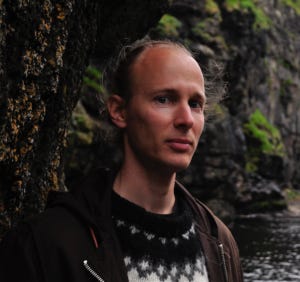
In much sadder news, new music criticism mourns this month the passing of Andreas Engström, whose death was announced on 4 May after a long illness. Born in Sweden but resident in Berlin for many years, Andreas was an energising force in European new music, as an editor, promoter, curator and, not least of all, perceptive and incisive critic. Too often, the world of new music seems too fragile to withstand the criticism good art needs to keep it sharp and honest. Writers (I’m as guilty as anyone) pull their punches. Andreas was fearless in this respect, never shy of calling out ‘spade’ when he saw one. He was also extraordinarily knowledgeable, as capable of filling you in on the latest developments in southeast Asian sound art as the goings on at Musikfabrik or Klangforum Wien.
And he was a brilliant and seemingly indefatigable organizer and creator, the kind of unsung hero who greases the wheels of creative industry: as (first) editor of the ISCM’s World New Music Magazine, the Swedish magazine Nutida musik (through which I first got to know him), and then of Positionen, in Germany, taking over from Gisela Nauck and relaunching the journal to international success. He also curated festivals and events, not least the renowned series KONTRAKLANG in Berlin. I spoke at one such event he organised, in Stockholm, in 2015. Andreas invited me over to talk about Music after the Fall, which was then very much in progress. He was an exemplary host: I had expected to stay with him in his apartment, but he vacated it completely and left me to myself. Andreas’s existence – as a gentleman editor of cultural reviews, in print and for a small but dedicated readership – was always something of a counter-cultural throwback, and all the better for it. That apartment was exactly what you would expect it to be: bookish, writing desk with recent journals and CDs, plants, an architectural tilt towards light, space and the view over the courtyard, kitchen a bit of an afterthought. It was a lovely place. I would bump into him from time to time at festivals after this, but that apartment will be how I think of him.
I know of two obituaries so far, posted by Andreas’s colleagues at Positionen and initiative neue musik Berlin, and seismograf. They are both worth a read.
Recording reviews
Just weeks after reviewing volumes 1 and 2 of Laura Cannell’s The Medieval Drone Society on these pages – and finding myself seasonally unsynced to get the most out of them – I’ve been listening to a freshly released third volume in the series. Distinctly more spring-adjacent (track titles include ‘The Ornamentation of the Sun’ and ‘Flower Crown Procession’), this one chimes more readily with the view of hawthorn blossom and budding beech from my window. The chosen release of Beltane, 1 May, does not seem accidental, either.
Is there something about Cannell’s reinvigoration of Medieval sounds that makes these three albums sound and feel so seasonal? Intuitively, you’d have to say yes, but I’m hard-pushed to say exactly what that is. Volume 3 is more major mode-coded than the other two, for sure. Its melodies are more lively (see the really lovely ‘An Antiphon after Hildegard’). But these in themselves aren’t Medieval qualities. Instead, there’s something about the way Cannell strips back to musical basics that opens a pathway to the temporal, existential basics of the turning year, the cycle of hibernation and renewal.

A part is also played by her use of electronic decays and reverbs. I’m still thinking here, but it feels as if the sense of location they create – that you are in a particular place, with the music – is a part of that. I’m going to have to come back round to that; the musical functions and meanings of resonance, reverb and decay have become something of a fixation of mine recently, and it feels like Cannell is using them in a very particular way on these three records. (And in a subtly different way between them, too.)
Anyway, in between tramping the fields listening to reverbed recorders and overbowed violins, I’ve got some more suggestions for your listening attention. First, a couple of highlights from the latest batch of another timbre releases (I will have more to say about Sylvia Lim’s new album as part of that batch in the next issue, which will also feature an interview with Lim), then a great NMC portrait of Seán Clancy, and, to end, the next episode in my quest to listen to all of Samuel Vriezen’s 94 Fantasias.
Jürg Frey: Clarinet Quintet (another timbre)
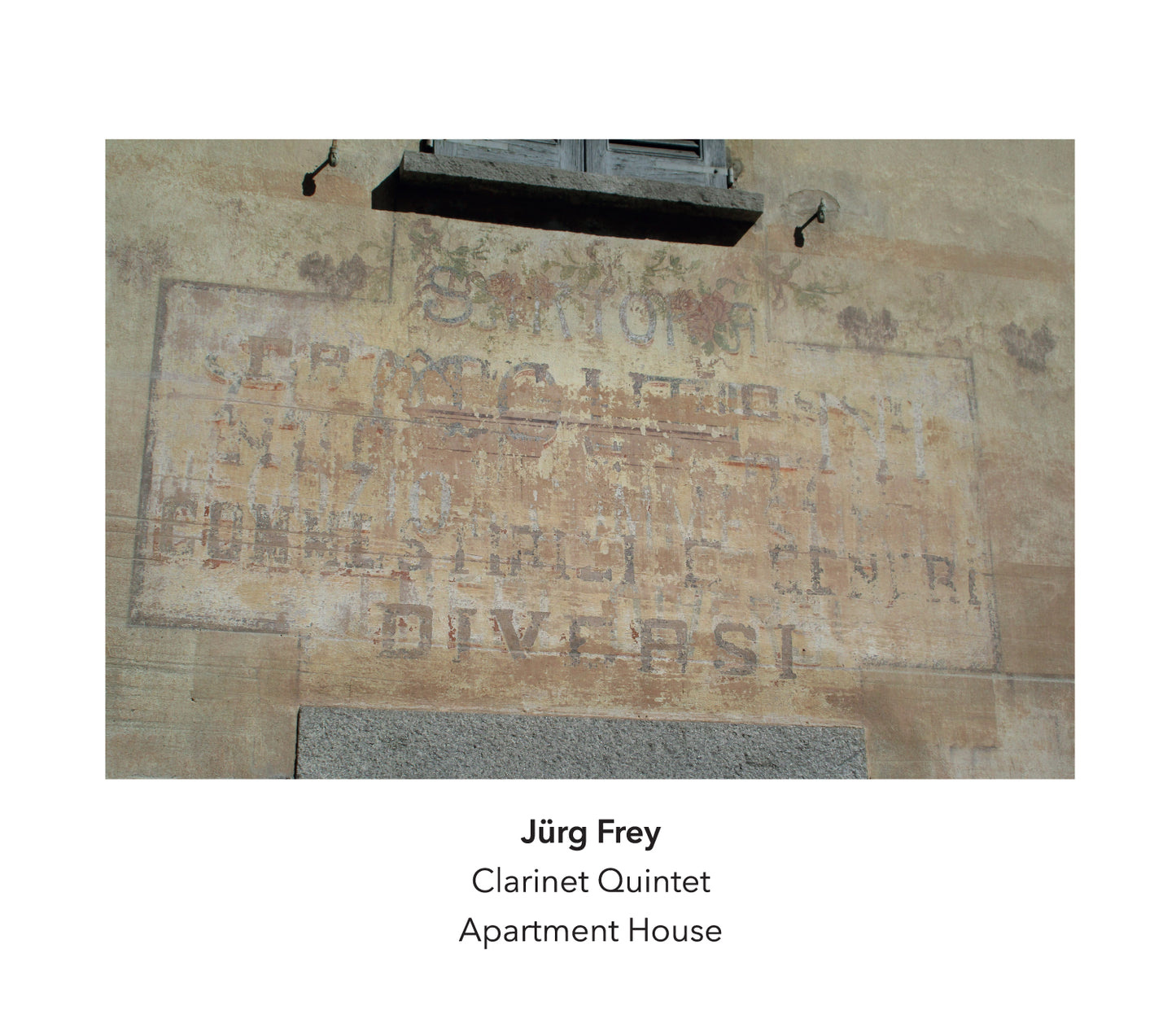
Is this something new? I can’t pretend to know every byway of Frey’s prolific output, but I went back through the half dozen or so CDs that I have and couldn’t find anything comparable, not even on the last another timbre/Frey CD but one, 2024’s Longing Landscapes, played by the Prague Quiet Music Collective. (I don’t think I ever had the most recent, Je laisse à la nuit sons poids d’ombre, or I have misplaced it; but listening to the extract posted by the label I would place it closer to the Frey of Fleetingness or ephemeral constructions than that of the Clarinet Quintet.)
Departures: Solidity, coming from a focusing of attention onto the centre of the sound rather than its edges (top, bottom, front and back). A vocabulary primarily of pitch rather than noise. Voice-leading, of a sort. Rhythm, just about. The use of textural contrasts to create drama, and hence momentum.
Continuities: Time as succession. Harmony as timbre, timbre as harmony. Form as accumulation, but also enquiry: why this? Why that? Deliberation: the placing of objects as much as the making of them.
Inferences: Like Frey’s music on a molecular level, Clarinet Quintet is more of the same but never the same. (Mark E. Smith: How can you have the same again?) The harmonic/rhythmic/melodic language seems to have taken a leaf out of Laurence Crane’s book, albeit without Crane’s ironic distance. I get the sense that Frey (not to say that Crane isn’t, in his way) is invested in the long-range implications of the harmonic tensions he is creating. This is music with an altogether different relationship to time than any other Frey I have yet heard: pitched forward into it, rather than deliberately pulling back on it. That is all very normal, of course; what I think is special about this piece is the relation in which it stands to Frey’s typical approach. You can hear it/him teetering, wanting to tug on the reins, to stand still; but at the same time wanting to inch forward. Apartment House, with Heather Roche playing the solo role (although this is really more of a duet, for clarinet and stringquartet), are masters of this space, of the profundities of the straightforward. Frey has long transcended the hoary old Wandelweiser tropes, but so much of that music was about locating edge states, between this and that. With his Clarinet Quintet, he appears to have found another, and one so much harder to tread.
P.S. If you are in London on 29 May, you can hear Heather and Apartment House play Frey’s Clarinet Quintet at St Mary at Hill, Lovat Lane as part of this year’s Music We’d Like to Hear.
James M. Creed: Tending (another timbre)
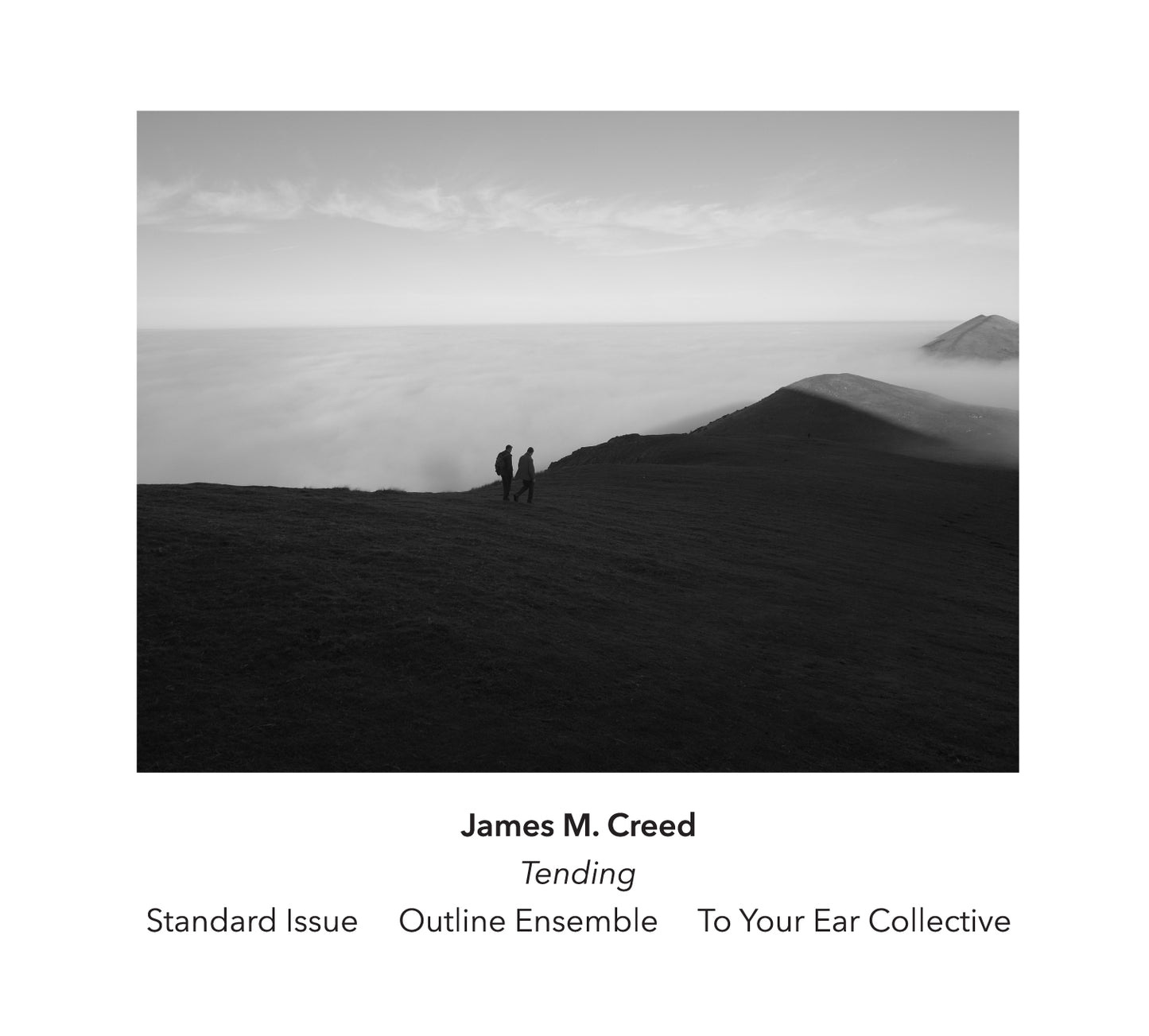
Not long after I put this on, I wondered whether it was high time we got over the slow/quiet/gently overlapping/watercoloury cloudscape music of recent years. What was once a gesture of resistance or reclamation is in danger of becoming one of acquiescence and repetition. Opening piece Double Quintet and Duo put me in that frame of mind: soft string harmonies haloed by piano chimes; later with the addition of soft, foghorning bass clarinets. Very pretty, not yet distinctive. I thought.
But the cleverness of this CD is in how it subverts expectations, each successive piece shedding something of the last. So Piano(s) and String Quartet keeps the slow pace, the droneyness of Double Quintet and Duo, but throws a little of its caution to the winds. The pair of differently tuned pianos are our first clue,1 the source of shimmering, synth-like splashes over a tautly held string chord: the basic idea is similar to that at the start of Double Quintet and Duo, but the effect is much weirder and more compelling. And then the music finds a different groove altogether – a sudden and unexpected drop away into just the drones. Even after several listenings, this moment still catches me out: it’s like the music has begun in the wrong order, like the first couple of minutes weren’t really meant to be there. They create a weight, an expectation, that is simply negated. Now this is something. And so when the pianos return, on a quietly stuttering tremolo that is itself soon left on its own, it’s clear we’ve been on the wrong foot all along.
And then with the third piece, Sextet and Solo, the pretences of harmony and movement are gone altogether, and we are into softly throbbing, Radigue-ish territory: seventeen minutes of it, the last four a sort of dissipated chorale of overlapping tones that bring us more or less full circle to where we began at the start of Double Quintet and Piano.
What isn’t clear from the CD (with its typically minimalist annotations), or from the interview Creed gives to Simon Reynell on the another timbre website, is that these three pieces are all developed from an evolving collection of open scores Creed calls Tending. From the score to another of these, Trio: ‘Tending is the things I tend to do when making music, written down and so becoming their own score objects; Trio is composed after reading a handful of these tendings in combination.’ Scores for all the pieces on this album are available on Creed’s website, and they are worth a look – there is both more and less going on in there than one necessarily hears at first.
The final piece, Octet: after five bars by Rebecca Clarke, composer (those bars being five separate moments from Clarke’s Morpheus of 1917–18), is the most dynamic of the four (dynamic being a relative term), although it shares with them an interest in the preservation and dilation of single moments, stretching them past the point of dissolution to where they re-plasticise into something new. Clarke’s harmonic colours remain, although the Ravelian flow of her piece is here crystallized into a sombre tension. I do rather like it, though; it reminds me of the effect a sepia tint and a fixed expression have on a photograph taken in Clarke’s time – when one knows there will have been as much gaiety in those rooms as in any other, despite what the pictures appear to show. This is, I’m forced to conclude, a notable and continually surprising release; highly recommended.
Seán Clancy: Where the Paths End (NMC)
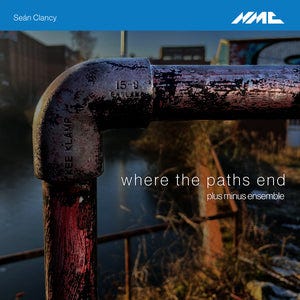
Let’s put Seán Clancy in the same box as Peter Ablinger, Joanna Bailie and others - composers whose music begins often in field recordings and emerges out of their transcription for acoustic instruments. Plus-Minus Ensemble – with Bailie as one of their founder members – are experts in this sort of repertory and ably negotiate the necessary balances that elevate this kind of work into something more than a sonic conjuring trick.
Where Clancy’s own music stands apart – on this collection of compositions, at least – is in his selection of base materials, and the covert (or overt) emotional resonances that they bring to his work. Title piece, Where the Paths End, is seven, quite distinct movements based on walks taken around London, Birmingham and Edinburgh. They pair field recordings (sometimes obscure; sometimes identifiable, if general; sometimes, as in the bagpipes and voice of the Edinburgh tour guide with which the seventh movement ends, quite precisely placeable) with instrumental music that highlights certain frequencies within the recordings, creates counterpoints to them, constructs new spaces in which they can develop strange and sometimes illuminating resonances. Christine Dyser’s excellent sleevenotes mark here a pair of mournful echoes: first, the therapeutic practice of walking uniquely empty soundscapes during the pandemic; and second, the scouring forces of gentrification affecting all three cities. In both cases, Clancy’s recordings speak of places no longer populated or reverberant in the ways that they were.
Fourteen Minutes of Music on the Subject of Greetings Cards, a musical reflection on the simple but affective video work Deepest Sympathy by David Theobald, follows in sound the story of a life, much like Theobald’s animation does through a series of Hallmark cards. Clancy’s score is marked with the captions of these various cards (‘A Baby Boy’, ‘Ahoy Matey, You’re 7’, ‘You’ve Had Twins’, ‘On Your Divorce’ etc), but to the listener these remain hidden: one must instead infer points in the life-course from the accumulation or falling away of contrapuntal voices (against an indefatigable, if flickering, piano ostinato), intrusions of dissonance, abrupt changes in texture and so on.
In both works, Clancy raises by now familiar questions of the persistence of and value of meaning in a digital era of transmediation and translation: in what way is our experience of the fictional life outlined in Theobald’s video work different when cute greetings card captions are replaced with more ambiguous musical gestures? What does the selective transcription of a cityscape to acoustic instruments add to that sound, tell us about it, stand in for?
Dyser’s note argues that Clancy’s practice points ‘towards the tacit socialities and universalities that are embedded in even our most private, hyper-personal day-to-day experience’; reading her words put me in the place of a musician playing this music more than it did a listener or even the composer. It is in bridging that gap between instrument and recording – from piano to dripping tap, cello to street voices – that those socialities are made and, I suppose, those universalities too, in that there is arguably something more ‘universal’ about a piano or a cello than the sound of people outside a pub or the beeping doors of a train. Again, this is a kind of music in which Plus-Minus really have form; recording engineer John ‘Spud’ Murphy deserves credit too for so carefully balancing and placing all the sounds here.
Dyser calls Clancy’s a ‘deadpan aesthetic’, and I get where she finds that; but I hear in it something altogether too engaged for that to ring true. I could call Bailie’s music deadpan; certainly Ablinger’s. But the stakes for Clancy, one feels, are higher than this. This comes across in part as a consequence of genuine lyricism in his music that goes beyond the tonal-ish resonances he draws out of his source materials and leans into swells of dynamic and texture too. But it is also to do with the way (on Where the Paths End in particular) that the recordings don’t just initiate the instrumental music, but the way in which the instruments speak back to the recordings, and so on. It really does feel personal. Perhaps most eloquent of all is the album’s concluding work: Five Lines of Music Slow Down and Eventually Stop, its title giving you more or less all you need to know, but its placement here, in the wake of works like Where the Paths End and Fourteen Minutes, gives it a much greater emotional import.
Samuel Vriezen: 94 Fantasias for 31 voices (tracks 49–60)
In which we approach the final third. (Previous posts in this series here, here and, to begin with, here.)

It sounds daft to say it, having now listened to sixty of them, but this was the first time I really thought about the way in which Vriezen titles these pieces. Or rather, the role that title selection plays in the aesthetic game that’s going on here. For example, No. 84 – Fourth World (To Vizenor) gets its title from the prominent perfect fourths at the start of its theme, which give it a fanfare-esque quality, at least to begin with, before the by-now familiar path towards congealment and dissolution. The origin of that interval is an accidental occurrence of the compositional algorithm, and within the rules of this game of no greater or lesser import than any other musical feature. But it leads Vriezen to a pun, on the idea of a ‘fourth world’ in The Heirship Chronicles of Anishinaabe author Gerald Vizenor, and from there, to an homage to Vizenor and his work. Which is to say, as obvious as it is, that everything expressive in these works, everything referential or programmatic, is emergent rather than played. But it is also something to be sought and found: and that seeking, that sifting through the abstract data stream in (possibly futile, possibly quixotic) search for meaning is the point. Of No.77 – Lament Weft, Vriezen writes, ‘his one always remained mysterious to me. Originally I heard it in vaguely cosmological terms – some of these Fantasias strike me less as an unfolding of voices than an unfolding of a sound universe. This one is clearly woven out of strands with a clear character, which I’m now hearing as lament-like: descending figures, expressive (plaintive?) vibratos.’
With that in mind, what I’m starting to become aware of in these pieces is their instability: they may each contain moments of apparent significance (clustered around the beginning, when the character of a new theme is introduced, such as those perfect fourths; or around the end, in the coda or fade out, when a mood of reflection, exhaustion or devastation prevails), but these are always illusory, undone as they are by the relentless of the process itself. What we get, then, are moments, attempts, and the void. Vriezen’s practice of listening to the results of his experiments, trying to decode what they might mean so as to give them titles, is as much a part of this expression as are the sounds themselves.
Having said that, there are still exceptions, No.93 – Battle Songs being a notable example among this set. Vriezen says he assigned its title based on the ‘rich, intense polyphony that happens in the first half of the piece, where voices ascend to outdo one another in emphatic expression’, but notes also that the second half – slow and deeply rumbling – may resemble an ‘after-image of whatever it was that has taken place’. A rare example, then, of one of these pieces whose title speaks to its complete form.
Words elsewhere
Not so much this month; editing gigs have been keeping me busy. Still, I wrote wrote a short accompanying essay to Riot Ensemble’s video release of Alexander Tillegreen’s Phantom Miniatures … A review for Gramophone of a CD of orchestral works by the Spanish composer Raquel García Tomás … And a short preview text for hcmf// on the composer Lauri Supponen.
The origins of this sound are an interesting story in themselves. Here’s Creed, from his preface to the score:
The first performance took place at Avalon Café, London, in September 2024, performed by Fernando Yada, Jay Austin Keys, Anne Yin Han, Matthew Gilley, Freya Hicks, and Rebecca Burden. Two pianos were used: the old, creaking upright that had been at the venue for some years, which could no longer hold tuning, and Fernando’s more stable upright which he was donating to the venue due to some logistical complications around moving to a new flat. The performance, then, served as a welcome party for the new piano, and a farewell for the old one. The two pianos were mostly in tune with each other around middle C, and much less in tune at the far ends of the keyboard—perfect for this material. Oddly, Fernando’s piano had two extra white keys at the top of the keyboard, so through the long, shared scale there was a sense of approaching a shared tuning, departing from it, and then one piano being left alone for the final stretch. It was very beautiful, and entirely unexpected—none of us had realised until it was already happening. There’s no need to reconstruct that situation in approaching other performances of the piece, but I think it’s useful to know about.
I was intrigued by your reaction to Jurg Frey's new Clarinet Quintet: "Is this something new?" I, too, was struck by the Quintet, to the extent that I have listened to it nearly every day since the recording was released by Another Timbre. I find the slow unfolding of the beautiful melodies in the Quintet irresistible.