
Purposeful Listening 19
Connected/separate

Parish notice: After this issue, I will be taking a short summer break for a couple of weeks. Paid subscribers will receive their regular Schubert Dub update next month, and there will be a shorter issue for free subscribers too, featuring a longish review of GBSR’s seminal boxset of the Feldman trios. But apart from these I will be putting my feet up in the French countryside for a bit. Regular service will resume in September.
Alex Ross
Readers will no doubt have seen the recent announcements from Alex Ross that he is hanging up his boots as a New Yorker columnist after three decades on the job. As he has been keen to point out, reports of his retirement, to say nothing of his demise, have been greatly exaggerated: he remains on staff at the New Yorker, and will continue to write, if perhaps less regularly but certainly with a greater purview. (He has himself mentioned interests in essays on ‘literature, philosophy, film, émigré stories, California stories, ancient landscapes, and new regions’.) Nevertheless, the closure of his regular New Yorker column is something to be mourned. In an age when extended critical discussion of new music has been squeezed to and beyond the margins of mainstream public discourse, it was under Alex’s pen a last, brilliantly hopeful bastion.
Will Robin, Ross’s long-time mentee, has written a fulsome encomium, beyond which I have little to add. Except to draw attention to the thing I admire most about Alex’s writing, beyond its obvious elegance: the effortless way in which it zooms from the micro to the macro, from a detail in a score (and Alex, for all that he is positioned as a mainstream author, has never been afraid to use the proper names of notes and chords) to its fullest context; to find the resonance of a singular experience in the auditorium of history. Read the last few paragraphs of ‘Great Soul’, his essay on Schubert, and feel its sweep from harmonic analysis to the collapse of Romantic idealism that the composer’s last years foretold. ‘Musical language is almost torn apart by memories of its past as well as by premonitions of its future.’ One day I will pull apart his words apart to find out how he does it. It’s something to do with storytelling, I will bet: often, Alex has seemed to me really a storyteller blessed with a musician’s ears. (‘What was he like?’, the first line of that Schubert essay, is a novelist’s opening.) For now, though, I will preserve those writings as the magic trick that they are.
Recording reviews
This week, I’ve had some thoughts on Valentin Silvestrov and the music of history on the back of a new double album of piano music performed by Evgeny Gromov; enjoyed a recording of music by Michael Finnissy and Cassandra Miller by Joseph Havlat; been pleasingly perplexed by Tim Parkinson; and returned once more to Samuel Vriezen’s 94 Fantasias.
Valentin Silvestrov: Moments of Silvertones (Kyiv Dispatch)
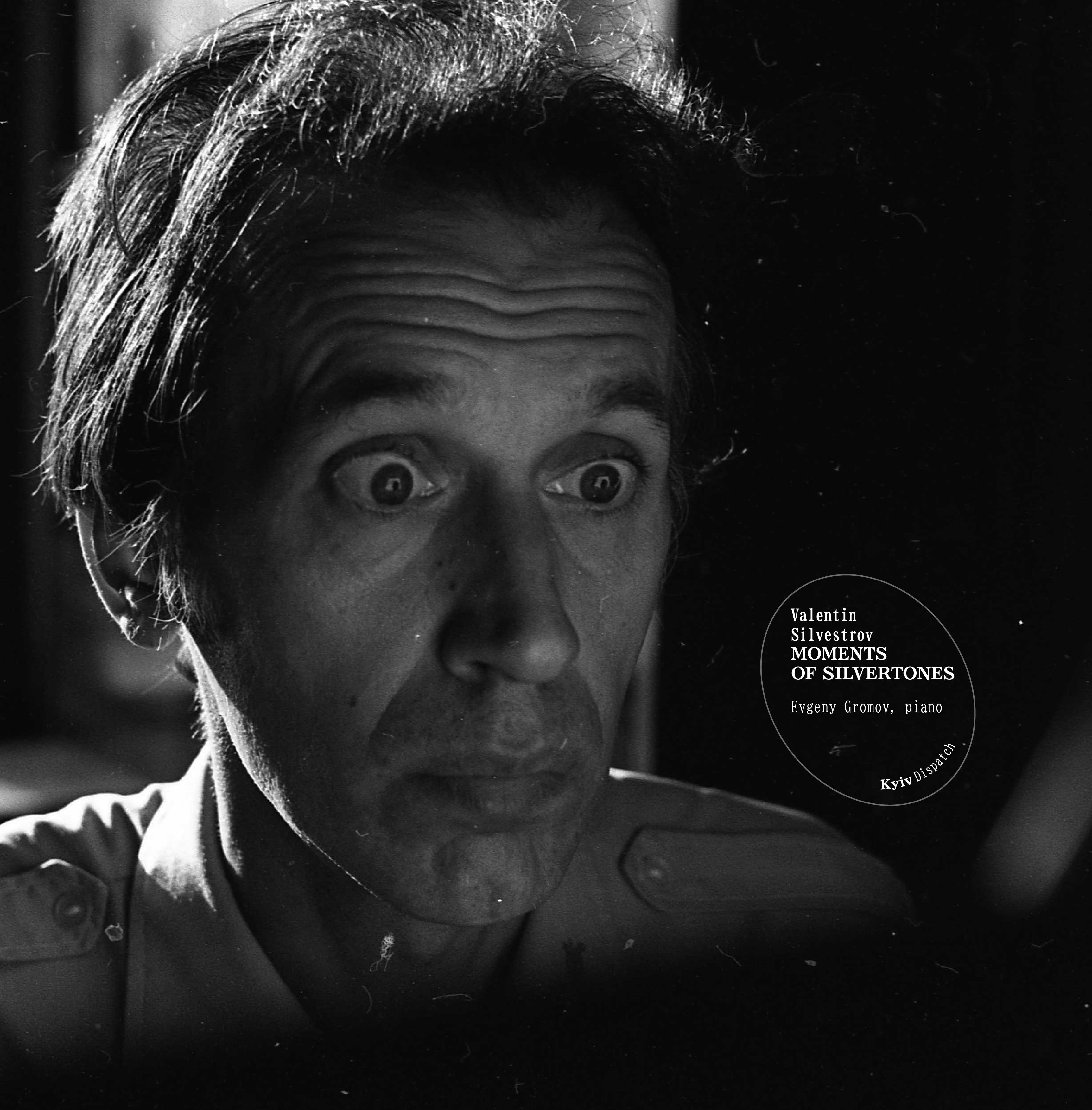
Readings of Ukrainian composer Valentin Silvestrov’s music are apparently inextricable from its history, and the history of his country. In the 1960s, finding his voice within the Soviet Union and at least partially aware of trends in the West, he wrote as part of Ukraine’s nascent avant garde, one based on imitation and secrecy, on the study of scores but almost never direct contact with the sounds they suggested. As for many of his colleagues, in Poland, Hungary, Czechoslovakia, Yugoslavia and elsewhere, it is easy to hear the productive misreadings and unencumbered vivacity of this music only within the Cold War framework in which it was made: the West free, innovative, path-breaking; the East imitative, backward, a kind of cargo cult of avant-gardism.
Such patronising Euro-orientalism is tricky to sustain, though. For one thing, the Western European model that is held up was itself too young, too raw, too diverse to have settled into an established practice. It’s hard to accuse Eastern European composers of being ersatz serialists when there wasn’t yet an established ‘right’ way of doing things. (Kreuzspiel features a percussive groove; is that ersatz? Il canto sospeso is poignantly lyrical; is that?)
And for another, this situation holds up – at best – for only a few years. By the mid-1970s, most of these composers (think Penderecki’s First Symphony, Górecki’s Second) had moved on entirely from serial experimentation. So it was with Silvestrov. By 1975, he was developing a more certain voice of his own, out of the concepts of aftermaths, meta-music and the postlude. Conceiving of musical history as at an end (a decade and a half before Fukuyama’s ‘end of history’, although not before Danto’s ‘end of art’), Silvestrov came to view the present day as its potentially endless coda – a space of reflection, memory and decay – and creation as the eternal teasing out of after-effects and fading scraps. By the 1990s, he was writing music in which ‘one is, in effect, experiencing the future of an event long gone’. His elegiac Post scriptum for violin and piano (1991) is perhaps the emblematic work of this type, one that steps happily into the divide between past and present but without wishing either to drive futilely into the future or to drag the past into the present. ‘The text has already been written’, Silvestrov once explained of his piece. ‘We simply add our annotations, thoughts, questions, consternation, astonishment and regret.’
The turning point between these two conditions is marked by (indeed can be heard happening within, in real time) his Piano Sonata no.2 of 1975. That work, a pretty chunky sixteen minutes, forms the appropriate pivot point of this two-disc, chronological sampling of Silvestrov’s piano music by the Ukrainian pianist Evgeny Gromov.
Either side of it are positioned three works from the sixties (Five Piano Pieces [1961], Triad [1962] and Elegy [1967]) and three from the 2000s (Moments [2003], Bagatelles [2005–6] and Postludium [2006]). In contrast to the Sonata, they are all fragmentary, fleeting; many of them are rarely heard. Music on the brink of extinction, we might say. Recording and release were hastened, according to Sasha Andrusyk’s accompanying notes, by Silvestrov’s late-in-life departure from his home country in 2022, forced on him by the Russian invasion. ‘The sense of urgency’, Andrusyk explains, ‘is not just because Silvestrov is approaching ninety years old but also out of the daily sense of mortality felt by all those living in Kyiv’. Thus, once more, our reception of Silvestrov’s music is inextricably bound to its historical context.
Such a view raises an awkward question, however. This album is presented as an attempt to reclaim or recontextualise Silvestrov’s music for Ukraine’s present moment. But with history having rushed definitively, violently back in, does it merely expose an unfortunate complacency to Silvestrov’s end-of-history attitude of the 1990s and 2000s? I’m not the one to say, except that perhaps this music (all of it) is better served by some distance from its historical context, rather than only in reference to it. Certainly there is a sad, fragile uncertainty to the late Moments or Bagatelles that endures: the shattering of security may come from many directions; the feeling itself remains universal.
(If I may be permitted a facetious comparison for a moment, I am listening to this record on the morning after England’s semi-final defeat to Argentina in the World Cup. Silvestrov’s music, it turns out, makes a devastating accompaniment to my mind’s loop of Jude Bellingham’s face rushing out, knowing he’s not in time to make that block. Walls and securities collapse in the same ways everywhere, it seems.)
From a similarly post-historical stance, I find the early works here fascinating, imbued as they have become, retrospectively, with the sense of a future that had not yet happened. (As they are also with the sense of a past that no longer exists.) For all their atonal grittiness, they are full of emotionally loaded what-ifs, of echoes and returns. The way that the first of the Five Piano Pieces keeps wanting to slip into ostinato; the way that Triad occasionally forgets that it’s not Fauré. The title of Elegy obviously foreshadows Silvestrov’s later preoccupations, even if its means of expression are less transparent. But I keep coming back to the Second Sonata, which begins in low, Mussorgskian tolling (over-written with an elaborate, almost Finnissy-esque filligree) and ends in high, Debussian tinkling. One an after-effect of the other, the music playing out over a quarter of an hour a slow tipping of the balance from former to latter.
I find it a remarkable piece: desolate, chameleon, always surprising, even as its overall arc is so strongly inscribed. I am aware of one other recording, made by Alexei Lubimov for Erato in 1992. Gromov gives it a slightly starker dynamic profile, heightening the music’s drama and its trajectory towards loss; Lubimov dwells a couple of minutes longer – speaking, in a work like this, more to a sense of spaciousness than to tempo per se. Otherwise, there is not much to choose between them. What sets the Gromov apart is its inclusion in a wider programme: hearing the Sonata in the context of what came before and what came after really sets its searching, transitional ambitions into relief. History again.
Joseph Havlat: Sinner, don’t let this harvest pass (Métier)

Talking of Finnissy … I can’t think of many examples of genuine X + Y collaborations between art music composers. Even in post-self 2026, the binding of a singular composer to a singular work – at least within a white, European tradition – is so strong that it’s a shock to see it formulated in any other way. Trust Finnissy to have done something different, though. And with whom else but Cassandra Miller, an artist who sees all musical identities in mercurial terms? That the composers of Folklore and About Bach should enter into collaboration with each other seems not only inevitable, but a fundamental property of the musical universe.
In simplistic terms, the nature of that collaboration on Sinner, don’t let this harvest pass, is a straightforward division of labour. Four movements, based on the four verses of a spiritual, ‘Sinner, please don’t let this harvest pass’, sung by the great Marian Anderson. (Finnissy and Miller drop the ‘please’ to increase urgency and shift their title’s emphasis onto ‘harvest’.) Two verses each, in the palindromic order Miller–Finnissy–Finnissy–Miller. But, as revealed by the album’s sleevenotes – another rarity, a reprint of the correspondence between the two musicians as they were writing – the interactions run deeper than that. Sinner began as a short piano work by Miller for Finnissy to play at the CoMA summer school of August 2014. This would become movement 1 of the final piece.
In fact, that whole concert is available to watch; Miller’s piece is at 24:36, but it’s fun to watch Finnissy working the crowd so I can recommend the whole thing if you’re inclined.
Finnissy plays his first response to Miller immediately after her piece. As he describes it in his spoken introduction, he and Miller shared the original recording, Miller making her version first and then he writing his version using both her materials and Anderson’s. As the correspondence preserved in the album booklet reveals, though, the process was a little more ad hoc than that suggests: Finnissy received Miller’s piece just over a fortnight before the concert (she had assumed it was too late to be played by then); eight days later (less than a week before performance), he emailed her back to say he had written a follow-up: ‘I started with your opening chord (not one I could have dreamt up for myself) and also stole a few more bits of material from you (grace-note Bs) as well as Marian Anderson, and had one or two scrapes along the way …’ Already, we can see the truly improvisatory, entangled way of working unfold – a chord ‘I could not have dreamt up for myself’ is selected as a problem to be creatively resolved, in partnership with both Anderson and Miller’s materials.1 This would become movement 2 of the final piece.
The impetus to continue followed quite naturally – Miller: ‘This is a fantastic exercise we’ve started – let’s keep at it!’ She wrote a putative third movement that borrowed elements of Finnissy’s second (a melody from its final section, an emphasis on line over harmony) and he wrote a fourth. A couple of years later (following a suggestion from the pianist Jonathan Powell), the order of the last two movements was switched, and the complete piece settled into its finished form.
I say all this partly for the inherent interest I find in it, but also because I feel like the nuts and bolts of its making are integral to our experience of the music. On one level, Sinner is of course a celebration of the brilliant Anderson – her life as well as her voice. On another, it is music about the nature of spirituality, faith, resilience and hope. But on another – inseparable from these – it is music about music’s functioning as a kind of social glue. I mentioned above the challenge a work by ‘Composer X and Composer Y’ presents to a white, European, art music model of authority, and it is no coincidence that Miller and Finnissy should turn to an African American spiritual, and its interpretation by a performer (rather than its reification as a score), as the basis of their own experiment. This is music that gains strength, not dilution, from variation and adaptation. It is music as a communal, rather than solitary act. As their renderings extend to the limits of form – the scattered pointillism with which Finnissy’s first version concludes, the etiolated melody of Miller’s second – Anderson’s presence seems to grow to fill that space, even as it is barely audible.
The album includes two more works of creative transcription, one by each composer. Miller’s Philip the Wanderer, while one of the earliest works in her output, is still emblematic of so much of it – a looped and layered transcription for piano of the playing of Mozambican musician Zhukake Masingi. Finnissy’s RS Geistervariationen are in fact a version on a version – transcriptions of Brahms’s four-hand Variations on a Theme by Robert Schumann, themselves a version of Schumann’s two-handed Geistervariationen (itself an elaboration on a melody that, legend has it, Schumann heard sung by an angel). And the set is finished off with the Schumann itself.
Tim Parkinson: The Projects (self-released)
‘Ah well familiar things, (like pencils, paperclips, bottle caps, or something), in a row, hold the line, suspended …’ – so begin Tim Parkinson’s enigmatic sleevenotes to his latest and no less enigmatic release. The words are meant to apply to the first of four pieces here, untitled 2021a for piano, but they could be applied cleanly to perhaps all of Parkinson’s music. Familiar things – chords, scraps of melody, gestures – isolated, placed in a row, held in suspense. The suspense is the key, I think. There’s something radically timeless about Parkinson’s music: it exists in relation to history, of course. (All those fleetingly familiar elements have to have come from somewhere.) But it constructs a self that is firmly, almost aggressively present. Things enter into these works without anticipation or consequence. In a row, but never on a path. This does strange things to our own sense of time. As when listening to Feldman, say, we become unmoored from time, but not, as in the case of Feldman, in a sort of passive drift within time, but rather as if time itself has disappeared. Feldman makes one question where one is, in time; listening to Parkinson one knows exactly where one is, it’s everything else that is thrown into doubt.
While its anti-developmental stance can make it somewhat austere in form, Parkinson’s music has always had space for reassuringly quotidian sounds – from as far back as 2003’s two cardboard boxes. untitled 2021a contains some lushly impressionistic moments, as if caught in a glitching hotel lobby (or perhaps the on-hold phone call referenced elsewhere in the sleevenotes); Project 3 includes a drum machine and, in its third movement, some minimalistic, pulsing electronica; and Project 9000 casts us all the way back to 2004’s septet with the hauntological sounds of a ballroom Wurlitzer (or something impersonating one). Meanwhile, untitled 2021b features Parkinson reciting a slow countdown over a limping piano part whose two voices seem to be forever on the brink of drifting apart in coordination and tuning. For those new to Parkinson’s assuredly odd, yet oddly welcoming world, this album would not be a bad place to begin. There is enough here to draw you in, and never enough to answer all your questions. Performers Siwan Rhys, George Barton, Travis Just and Parkinson himself play with just the right balance of warmth and devoted disinterest.
Samuel Vriezen: 94 Fantasias for 31 voices (tracks 61–77)
We’re into the penultimate batch of these, and the algorithms are still throwing up surprises. No. 54 – Avantgarde Music is predictably spiky to begin with, but features some long glissandi to keep things interesting. No. 56 – Alt-Subtilior is unusually subdued, shrouded in a crepuscular fog of distortion. One of the longest of the collection, No. 58 – Trade Winds, turns dense knots of counterpoint into fields of attenuated harmony.
But there is a sense, too, of Vriezen finding, or coming to terms with, what he has made. In the short notes he attaches to each piece we start to see call-backs (No. 37 – Leaves echoes No. 7 – Snow, for example). An overview of the whole is becoming possible, in which individual Fantasias can be seen as outliers or representative. The note for No. 104 – Natural Precision (To Webern) captures a lot of what this project appears to have been about, the commonalities between early polyphony and algorithmic composition, a sort of exploration of the limits of rigor and arbitrary discipline, and their power nevertheless to touch history, emotion and the sensual. It is worth reproducing in full:
Like nr. 54 (Avant-Garde Music), this one evoked for me the spirit of the great moderns, although in no way related to their tonal language. Though, come to think of it, I often felt a connection with Webern in how he was always thinking of the polyphony of the 15th/16th century – which these pieces relate to as well, though in a very different fashion. Here, it is a sense of motivic austerity with large jumps that evoked some of Webern’s spirit. Of course, the harmonic principle in these Fantasias is abundant flourishing rather than symmetry; nature refusing to be contained – until the end returns the work to just a handful of bare, simple intervals.
I love, too, this later exchange:
MF, referring to the Anderson recording: ‘this one is much more appealing – sort of clunky, and in a key (one sharp) that I haven’t used before.’
CM: ‘ … after the thousands of pieces you’ve written, you MUST write one in e minor one of these days, it’s really the best key out there, and great congregational hymn range. :)’