

If you’ve paid any attention at all to New Music over the last few years, you will have come across the name of Ty Bouque: singer, critic, Substacker, VAN contributor, Loadbang member … Ty is, as someone once put it to me, a phenomenon. He first introduced himself in the mad spring of 2020, asking if I would take part in the (hastily onlined) festival he was putting on with some student colleagues, Everything But the Kitchen Sink. In the event, my shaky internet connection and worse Lachenmann jokes were the warm-up for a bill that included George Benjamin, Chaya Czernowin, Michael Finnissy, Rebecca Saunders and many more. Not long after, he wrote to me again: did I ever take private students for writing lessons, and if so, could he be one of them?
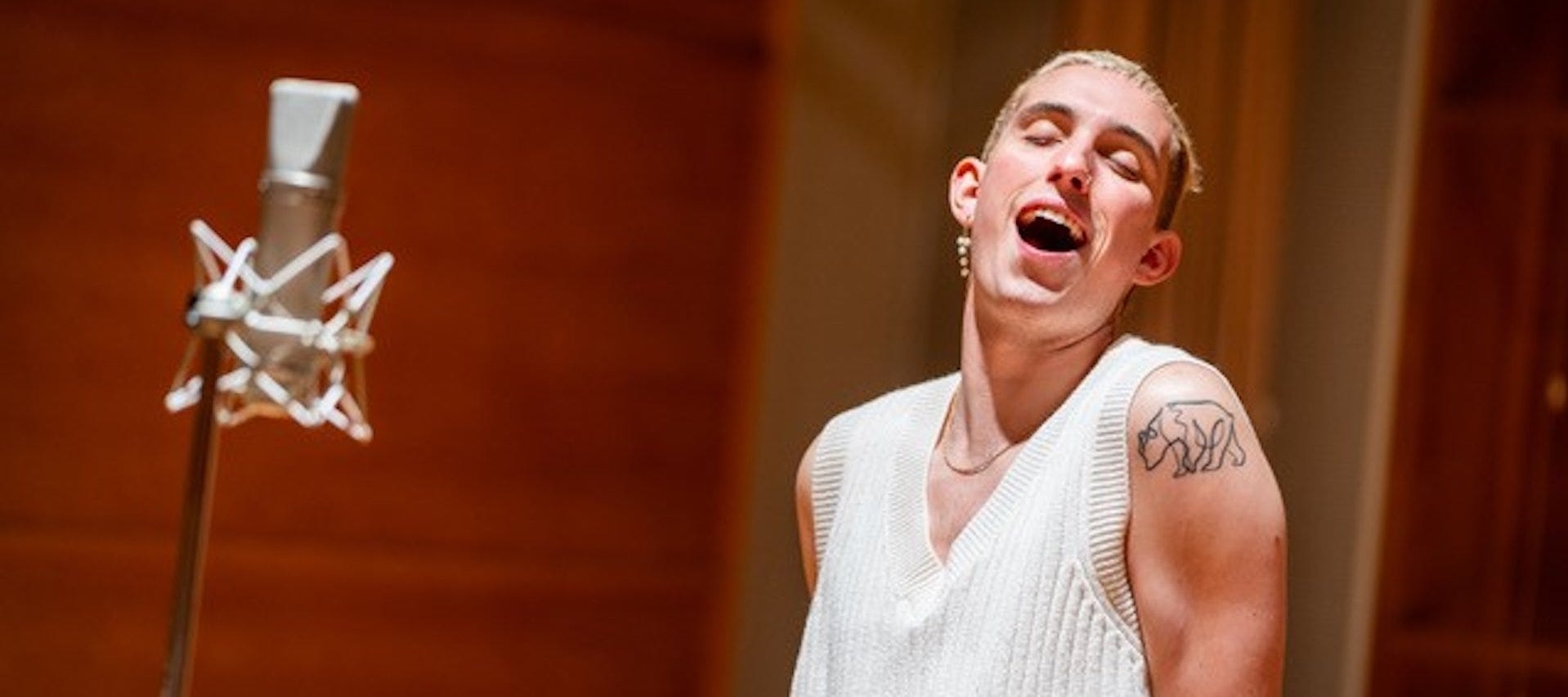
And so, for the next two or three years, Ty and I would Zoom every fortnight. I’d try to teach him a little of what I ‘knew’; he would outpace me with his breadth of reading and listening. Before long, I was learning as much or more as I could possibly be teaching myself. Our meetings became less lessons than vast, rambling chats over aesthetics, philosophy and New Music gossip. Most of my Liza Lim book was trialled and honed in these conversations, and much else besides.
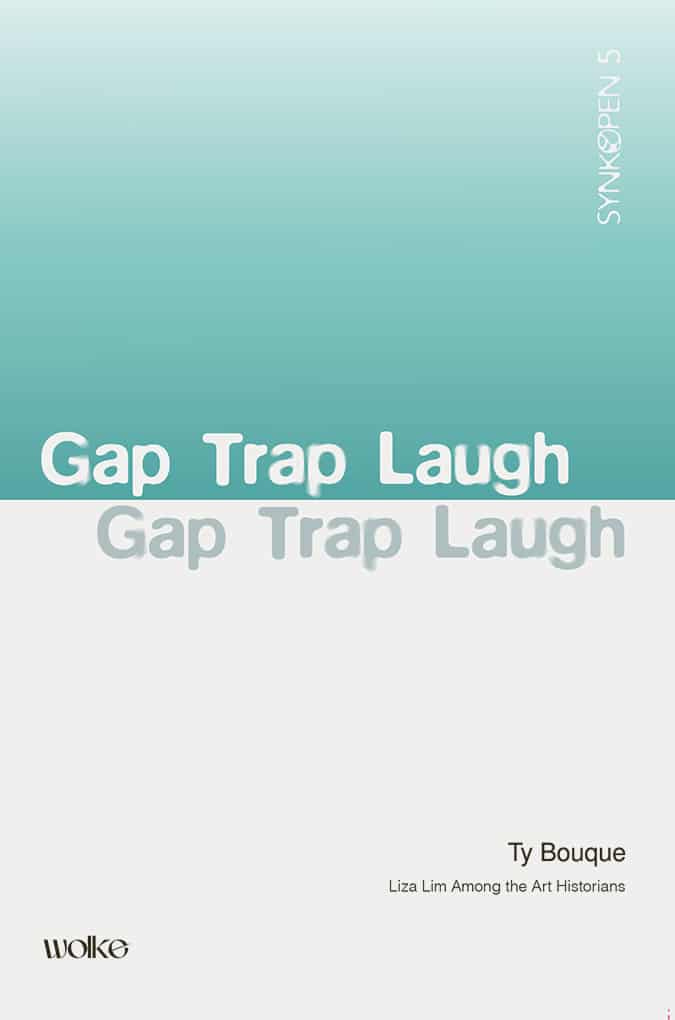
And now, Ty is an author in his own right. Characteristically, he is debuting with not one but two books out this month, both, as it happens, on and around Lim. The first, for Bloomsbury’s 33 1/3 series of album monographs, is on Klangforum Wien’s recording of Extinction Events and Dawn Chorus for KAIROS. It is, I believe, the first instance of a New Music album in that legendary series – and the status of ‘New Music album’ is one of the many topics Ty addresses in its 30,000 words. The second, Gap Trap Laugh, is a lengthy meditation for Wolke Verlag on a single moment1 in Lim’s Annunciation Triptych. More speculative, less bounded, it is a possibly unique example of its kind in music, and a prompt to all music criticism to be better, be different.
To mark the occasion(s), I suggested to Ty that we do something together to post here. He readily agreed, but with the stipulation that it wouldn’t be the usual Q&A format. Far better, he reasoned, to do something that reflected the to-and-fro of our regular conversations. So that’s what we did. Lim, and Ty’s two books on her music, were ostensibly the focus, but we also discussed illness, rehab, extra-bodily experience, the task of music writing itself and much else besides. We spoke for about two hours, with the tape rolling for most of that time, so I’ve split the transcript across a pair issues (you’ll get the second in a couple of weeks). Some of the mutual back-rubbing has been taken out, and some editing has been done for clarity, but otherwise it’s all pretty close to how we said it. Those two hours were some of the most remarkable I’ve had connected to this newsletter.
Ty is currently a PhD student at the University of Chicago, and he spoke to me from his home in the city in the same way as he has for all our conversations: fresh coffee in hand, the sun yet to come up behind him.
Interview-not-interview with Ty Bouque
TRJ: We are both massive writing nerds, obviously. So I think you’re going to enjoy the fact that the first thing I want to ask you about is a footnote.
TB: [laughs] Excellent!
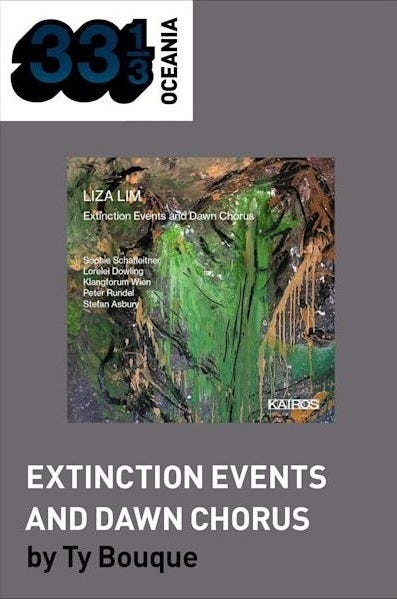
TRJ: This is in the Extinction Events book. You’re talking about the re-enchanting call that comes into New Music: ‘the return of song-magic was heralded at different moments by different flags – decolonization, gender parity, aesthetic inclusivity, improvisation – the common thread of which was a demand for more ethical exchanges between bodies and the musical matter of earthly being’ … I have an idea of what I think you mean by song-magic, but what do you mean by it?
TB: In some senses, that footnote names one of those ideas glimpsed and then fled from in the process of writing because you realise it touches something bigger than that particular book can handle.
I think the career of a writer is returning to those footnotes in one’s life and recognising ‘there was always something there, it was just more than that particular vessel could contain.’ And so I need to now go back and open that particular pocket and see what was inside it.
You never really go anywhere as a writer. You do, of course; but mostly just by opening things that have always been working in the unconscious and burrowing down over a career, right? This is one of those ideas, which I stuffed in a footnote because it seemed bigger than would have been responsible to unpack there.
Song-magic is kind of a redundancy. Cantare, the Latin for singing, is just one syllable away from incantare, incantation. One of the concerted efforts in that first passage of the book was to redraw the lines by which the idea of song in New Music was conscripted.
We have seen a marked re-entry of a kind of affect into New Music. Hans Thomalla really wants to call tonality an affect; fine, you can take it that way. Some people want to talk about the reintroduction of feelings. Some people want to talk about the reintroduction of history. All of which are, I think, names for the same kind of permissibility that has flooded back into the field. Which I think stems mostly from the declassifying – and not in the sense of opening up a thing that was under lock and key, but realising that classed sounds did not need to be left out of the project – of New Music. And so harmony did not need to be classified, melody did not need to be classified, as higher or lower, richer or poorer.
So this idea that song is returning is not just a formal box or generic box in which we recognise that that’s a song and this is not. The ensonging of New Music is the sense that imagination and mysticism are making a comeback at precisely the moment that they seem to be falling away the most in the world around us. And this points to the fact that ensonging isn’t just a principle of the ‘ecological’ school of thought in New Music: in some senses, we’ve done this dance before. Each time we try to reappraise the boundaries of what belongs and what doesn’t in New Music, every time that the field gets slightly larger, we include more under that umbrella. We’re saying, ‘This spell can cast further’.
TRJ: You’ve anticipated what I was going to ask you, because there’s – I don’t want to call it postmodern – but there’s a post-1960s kind of atmosphere that includes Sinfonia, includes Kontrakadenz, includes Partiels … includes, you know, whatever you want to name. It’s this readmittance of affect, that the music doesn’t exist in this completely abstract sphere of relationships, but does something; it’s people talking to people. And that something gets readmitted at some point in the late 60s.
TB: And I think that readmittance is bigger now than it was.
TRJ: I took that to be what you were talking about with the re-enchanting of song. And then what I found really interesting was that in Gap Trap Laugh, you come back to ‘the de-hegemonizing of New Music via huge advances in globalisation, gender parity, decolonisation, and a new evaluation of aesthetic inclusivity’.
And this is the same thing. But I’d only ever really thought about that idea as a technical thing of readmitting tonality – or at least nice harmony – as an idea; readmitting melody, readmitting these things. But actually, you tie it to much bigger themes: that it is to do with the much more social and political reorganisation of New Music.
TB: Yeah, I think so. I know it’s the very first thing you said, but I’m still thinking about it. As you were saying this post-1960s movement, I misheard you at first and heard ‘post-‘90s ‘60s’, which is maybe even more accurate in that we are post both the actual 1960s and the 1960s that the 1990s had in my mind. There was a particular idea of what the 60s meant in the 90s. And there was a concerted effort, during that decade, to read away from that. And it wasn’t just this thirty-year epicycle that New Music seems to have. But the 60s were to the 90s what the 90s are to us now.
Jonathan Flatley, the theorist, taught a course in Chicago recently called ‘Getting the 90s We Deserve’. And there’s something of that here, too, because all the movements we’re talking about really are born in the 90s, but they come out of the reckoning that, ‘Well, we’re far enough away from the 60s to make some sense of it, perhaps.’
What we’re talking about is this question of vernacular, of dialect, of mother-tongue. The language in which New Music thinks itself, the musical language, has politically scaled itself outward, and in doing so has also aesthetically scaled itself outward. Now I’ll be the first to say that I’m suspicious of anything that flies itself under the flag of a non-musical priority. Not from an exclusionary standpoint, but I’m sensitive to putting anything other than music first. It’s that thing in Gap Trap Laugh about the resistance to a kind of feminist composition, where it seems that the composition too often comes as an afterthought.
But to add to that, it’s easy for bad actors to co-opt each one of those banners or flags under which aesthetic inclusivity has flown, because of that Stanley Cavell thing: that because fraudulence is the endemic experience of New Music, we don’t have an adjudicatory system by which to measure who belongs and who doesn’t, who has achieved success enough to warrant belonging and who has not yet. We don’t have those metrics. They’re individual, they’re utterly subjective. No one in the field knows who’s in and who’s out.
There’s a road in Chicago called Wacker Drive. It runs the circle of downtown. And there are two Wacker Drives. There’s Upper Wacker, and there’s Lower Wacker. And Lower Wacker is in the dark, there are these long tunnels. And sometimes you can see the city, but sometimes you’re just in the tunnel. And Upper Wacker has this beautiful view of the river.
That to me … like, there are people in this field that I never see, we’ll never be on the same programme. And that’s fine. But those people consider themselves as belonging to New Music, and I consider myself as belonging to New Music, and we never see each other. How is that possible? It’s because none of us has the adjudicatory metrics by which to measure inclusion.
So this leaves room for bad actors who take precisely these overarching movements or banners or flags, and weaponise them for a minor celebrity, as opposed to thinking seriously about the formal introductions that political permissibility makes possible.
TRJ: You talk about Extinction Events in that sense. You mentioned feminist composition, and I think you’re saying that you don’t like the idea of composition that is just about feminism. Or composition that is about the environment or about whatever, right?
TB: Right.
TRJ: What is more interesting is composition that is done feministically or that behaves feministically. And Extinction Events does behave ecologically. It’s not pointing to nature. Even in the passages of it where it does say, this is this bird, these are these fish, it’s actually doing the ecology rather than being a pastoral evocation of something.
Is that what’s going on with the Catastrophe Chords in Gap Trap Laugh? One of the most interesting sentences in that book is when you’re talking about Seth Brodsky’s interpretation of these two chords, and you say, well, yeah, but he’s assuming that this catastrophe is one that’s happening for the audience. I take it you are saying, actually, no, the work is behaving catastrophically rather than representing it?
TB: Right.
TRJ: I found that such a challenging idea because, yes, theoretically that might be true, but ultimately it’s still music that is being listened to by an audience. So where does that leave us?
TB: Sure. Back to that first thing we talked about: this idea that a career of writing is like opening pockets in the same question. I’m now midway through this new book on Rebecca Saunders – which, courtesy of a crippling drug addiction, I have to write on a 1970s Royal typewriter because the internet is not a friend anymore; a device that’s constantly accessible to it is not my friend anymore, and so I’ve been writing all of these things out on paper by hand again, which is a good return to form for me … But there is this essay by Hölderlin. I mean, Hölderlin is a much better poet than he is a philosopher, but he’s friends with Hegel and so he’s attempting to think in parallel with the philosophers. But his philosophical writings are inscrutable, because he’s a writer first and so he puts on these grandiloquences and then confuses himself and gets lost. Certainly, it’s remarkable to watch that process, but maddening to try to follow.
He has an essay, ‘Über die Verfahrungsweise des poetischen Geistes’, ‘On the Mode of Operation of the Poetic Spirit’. In the very last paragraph – which is a two-and-a-half-page sentence, because of course it is, why would you ever use a period? – he talks about the poet receiving the world. And that you work very hard to become attuned to things in their thingness, as they actually are. Not as ideology or culture has presented them to you, but as these things really are unto themselves.
And he says that at precisely the moment when the world gives itself to you as it is, or when nature gives itself to you as it is, you must ‘nichts als gegeben annehmen’. Take nothing as given. There is one more step of withholding for the writer, that even at the moment when you think you have received the world in its true form, don’t even take that as it’s given to you. Hold back once more.
And I’ve been thinking a lot about ‘Take nothing as given’. Or, ‘Nothing is the only thing that you can ever take as a given’. And in a moment like the Catastrophe Chords in Annunciation Triptych, if you start writing about catastrophe and what catastrophe sounds like, you’ve already taken something as given. Which is that you can hear it, that the vector by which it addresses you is, in fact, the one through which it wants to be written. And that assumption is already one leap too far. That if, as soon as you take it as, ‘Oh, it’s a big chord and it’s loud … ’. Yes, I can feel that welled-upness, the clutching of the pearls at precisely the moment when the orchestra barrels out and it’s the loudest thing – in a live performance you get the fragment of a warning because you see the conductor give the upbeat and you know that something is coming, but on a recording, you don’t, it just kind of blows through the speakers – and it’s a chord impregnated with affect because it’s a half-diminished [ie, a ‘Tristan’ chord] and it’s voiced in that super bright high brass way. It carries such a weight or a charge that addresses its listener.
As soon as you assume that was meant for you, that’s one leap too far. That’s happening, but can I pull back from that feeling enough to say what is actually happening? Formally? And it’s not necessarily a thing that you can ever experience, right? I’m not sure I can listen to that and not be caught up in the feeling of catastrophe. But writing doesn’t know that.
And – as you’ve said to me before – writing about music happens at a different time from the music itself. And so I’m forced to reconcile, not with the immediate feeling of that chord but with the impression, the exuviae, the memory of it, upon writing.
And that then presses this question. Can you take that as given? Are you sure that that was happening to you? Or did feeling get in the way? And is there something else available if you refuse to incorporate it into logics you already know?
TRJ: That is so hard to do, though, right?
TB: [laughs] I mean, this is the question: can it be done?
I have questions for you on this. Because you are, at present, working on an extraordinarily vulnerable project that names a problem that we haven’t yet been able to address adequately in the field. Which is that for people in the field this music means a life. It means the idea of life. The courage to go on.
(I will add an asterisk here that, in her early scores, Rebecca has a tendency to steal from Rihm. When she wants a phrase to continue, for a player not to get caught up in a whole note, she’ll write gejagt, in the sense of Jagden und Formen, right? This kind of ‘chase, or ‘hunt. And later she loses the German and picks up Beckett and just says On. Press against the front, just go on. And on is a sense of tipping forward in a moment of stillness that is impossible to transcribe and impossible really to name.)
The thing that your new book is doing is, in some senses, looking for the moments in which music has meant on. And that requires modulating, in some sense, music and its meaning into the particulars of a life lived. And so there is an exchange rate that happens between those currencies, because they’re not the same thing. One has to pay the other a certain quantity; and that goes in both directions.
Schubert dub 1
The post that follows is an extract from my current book-in-progress, tentatively titled Schubert dub. Much more personal than anything I have written before, it is an experimental memoir/essay in listening, bodies and resonance. Even I don’t know how most of it goes yet. The first few extracts posted here will be free to all readers. After February, su…
So I wonder how you have found the treating-the-music-on-its-own-terms question that we’re always thinking about? You know, every composer that you’re talking about deals with Schubert differently. It’s a different Schubert in every body of work. But it’s also the same Schubert because we only have one corpus. And your Schubert is going to be different from Morton’s, is going to be different from Richard’s. How have you found or navigated in language that transition between, say, Vanity, which asks to be written about in a certain way that’s not necessarily a way you felt about it in the moment of hearing? How are you negotiating that exchange rate?
TRJ: Oof. That’s a really profound question. I hadn’t thought of that kind of exchange, but I think it is definitely there. I suppose it’s a balance. There’s a musicological approach, which is, ‘This is what is happening in Vanity with “Death and the Maiden” appearing at the end’. And you can talk about that in analytical terms. You can draw on the realities of the score and the things that Richard says about it and so on.
And that exists and is definitely part of the story of the thing. But then there is an autobiographical thing. I’m trying to write from a position that is not the register of a professional critic, but in terms very much of what this particular sound, or this collection of sounds, does to me. And I’m trying to do that at a level of intimacy, vulnerability, whatever, that would be inappropriate, I think, for a professional critical setting.
But I think that’s almost the USP of the book. Take the two chords from the C minor Sonata that Barrett borrows in nacht und träume that kick all this off. Just listening over and over and over to those chords, and playing them on the piano and thinking about them in the context of the Schubert – but in the context of the Barrett, in the context of what I was doing that day, what I’m doing today – feeding all of that in and thinking, okay, what is the complex of experience that is happening here? I definitely lean into that.
But you’re right, that there’s a more objective musicological register that has to exist in order to introduce those things and to put them into the world. So a kind of fudge, I guess, is the way that I do it. I mean, with so much of my writing, the editing that goes on is just … I don’t edit with a scalpel; I edit with the back of a spoon, just trying to just smooth everything together. Okay, if this thing has to be here, but it has to somehow meld with this thing, we just massage, and massage, and massage. And find the right rhythm or, you know, just get the metaphors to sing to each other, get it all under one thematic umbrella.
That’s a peek behind the curtain. I suppose I’m thinking about the goal. In what direction do I want to point the writing? And what I want to point it towards is the sensation of music. What does that actually feel like? To me, but also I think more generally. What is the experience of music?
So you have to talk start somewhere with, ‘Here’s what happens’, but you’re aiming it towards, ‘This is what it feels like’.
TB: Can I ask you a follow-up question that’s maybe vulnerable?
TRJ: Yeah.
TB: It seems to me, thinking about the time in which this book is being written – and the kinds of works and the kinds of composers and in particular the valencies of Schubert that it’s calling up – that what makes that exchange rate possible, or maybe what the exchange rate is, is the knowing that I am going to die. At some point.
In some senses, the way that we’ve been talking about – that you and I have always talked about – writing, and that what you’ve said to me before about music giving you something you do not have, is a form of death, right? I leave this body for an experience that I don’t know and don’t control and don’t name. I – both the composer and I – die here, just a little.
And, yeah, I ask, tentatively, maybe apologetically, if you have the words, to say more about what it means, to tender that autobiography, on the grounds of ‘My death comes here’. Just a little.
TRJ: I don’t see it as death. Mortality, definitely. I mean, when you’re writing about a chronic illness, mortality obviously shades everything that you’re doing. But I don’t see that kind of extra bodily experience that I’ve talked about that you mention – that the best musical experiences take me out of my chronically ill body and give me a body that is momentarily free of that – as death. That is a life-giving thing.
TB: Mmm.
TRJ: It’s a vision, I suppose, of an alternative track, maybe. Of a path or fate that didn’t happen. But it is still something that music gives me access to. So it is still a thing that is happening in my world. And it comes with basically no cost. It doesn’t hurt anyone. It doesn’t hurt me. It’s a completely guilt-free indulgence to go into a piece of music and say, ‘Just absolutely take me out of this’. So I don’t see it as death. I see it as life.
You mentioned the idea of mastery within that. And that is one of the other things I get from music. I have come to find that I listen like a sculptor handles a piece of wood. You give a carpenter a log, and they know what to do with it, they can turn it into something beautiful, and they can make that log sing. You give me a piece of music, almost anything, and – rightly or wrongly – I feel like I have the skills to make something from that, through my listening, through my writing, that at least pleases me. And that’s simply just a craft that I’ve developed over, you know, twenty-odd years of people sending me pieces of music and saying, can you write 400 words on this? And that creates life. So I hear what you’re saying, but that’s really not how I experience it.
TB: Can I talk about rehab, for a moment?
TRJ: Of course.
TB: The thing that you’re describing is the thing that Derrida says about Cixous, right? Like, the title of his book about Cixous is H.C. is for Life, That Is to Say …. She writes on the side of life – not pro-life in the American ideological sense, but her writing remains on the side of the living. And one of the things with which I have had to grapple in recovery has been an implicit but insuperable negativity towards which I have guided both my writing and my singing. I have attached maybe too much significance to the philosophy that ‘It is not me that does this, it is something that comes from the other side. I am only the body through which it travels’.
I think this way about singing. Every work, despite the fact that it is undoubtedly my voice, requires an idiosyncratic solution to its articulation. And you have to lay at the feet of the work and ask, how is it that you want to be sung? What are the particular sensibilities that I have to inhabit or adopt, to give you adequate voice? Because if I just apply the same principles to every work, I will do a disservice to 98% of them.
And I think in some senses, that was a calculated reparative to the diva narrative, to the Being of a singer, which I have found to be a really mortifying life’s work. I wanted to put the music first and not my voice, and that required admitting that I was not the important one in the production of song.
And writing became much the same way. I found that the thing I had to think towards was: if the music were to read this, would it see itself? And of course, it can’t do that. But what would it mean to write a language towards the outer shore of signification, in which music could look back with eyes that I don’t recognise? And as a result, there are necessarily, in each one of the books, passages whose meaning I don’t quite know. And I have left them in, at risk of persecution. Knowing that they, hopefully, are where music writes itself.
But in prioritising both of those philosophies I inadvertently divested from the meaningfulness of life. I treated the body as an empty surrogate for other things. And when you’re not doing those things, you have to fill it with something. To make it feel worthwhile. And a particular class of street narcotic became my preferred, uh, vanishing point.
One of the things that I have had to come to real terms with in recovery …
I don’t thump the twelve-step bible, but those first three steps are all about the turning over of life to a higher power. What Kristeva calls ‘this incredible need to believe’. And I have not in some time believed in anything. I have, for long stretches of my life, disbelieved that anything that the ‘I’ experiences about music is inherently meaningful. I can have feelings about it, but they don’t matter. At least not to the music. I feared feelings as an ideological construction. I feared them as autoerotic indulgences that had no bearing or no valence on the acute formal meaning of a work. And then they say you have to get a higher power in recovery. You have to become a kind of optimist, have to believe in redemption, which I was initially resistant to because it’s not my natural occupation.
But the thing I have had to come to believe in, then, is belief: that one can believe in something, in life. One can still be on the side of life, even at this late date in history. And that is very hard to wrap my brain around: to be critical of cynicism, and to trust against all odds that what one believes in is worth something. Even if only to you. God, that’s hard.
TRJ: Thank you for sharing that. I haven’t faced the same challenges that you are facing and have been facing, but there’s a very strong inner voice when I’m writing all of this stuff. It’s what prevented me from starting this project for so long: who gives a shit about me and my little life? Constantly bumping up against the idea that I don’t think anyone will find this interesting has been a challenge.
And with every memoir, or memoir-adjacent book that I’ve read in the last couple of years, I’ve gone, ‘Oh God, this person has this really significant moment in their life on which the whole project hinges’. There’s a book by Tom de Freston called Wreck, which is actually really close in many ways to what I’m trying to do. He’s a painter, but he’s fascinated by Géricault’s The Raft of the Medusa. And he begins a project that is his own response to that painting, but there are also references to his own life and to the Syrian refugee crisis and so on. And as I was reading, I was drawing comparisons and thinking ‘Okay, on those terms, perhaps I’m not an imposter. I have a life story, and I can connect it to an artistic project of someone else’s; this is all right.’
And then – and this is giving away the ending of the book – he accidentally starts a catastrophic fire. The work he’s making is about damage and ruin, and he gets carried away using a blowtorch to char little bits around the edges. His entire studio is lost. All of the stuff that he’s been making. It was basically complete. He’d done his Raft of the Medusa piece, he was just tweaking it, and it all gets destroyed.
TB: How do you carry on from that?
TRJ: Right? And it’s brilliant writing, but I found it personally so deflating. Like, ‘Oh, that’s a really significant thing. That is worth writing about, but I don’t have that!’
TB: [laughs]
TRJ: What would be my comparable thing? I go to Wigmore Hall, maybe with my consultant, and I see Ian Bostridge singing Winterreise and give myself frostbite or something? I mean, what is it? Do I decide to become an itinerant hurdy-gurdy player?
TB: [still laughing] Oh dear, no!
TRJ: So I grapple with that thing of ‘Who cares?’, because I don’t feel like I have a big enough thing to motivate a story. But it doesn’t actually stop you from writing. You just push on. I think what I ultimately come round to is: just do the thing you’re doing, but make it as good as it can be, and hopefully its general goodness will be enough to justify its place in the world.
The appearance of two Romantically orchestrated tonal chords, seemingly out of nowhere, in the middle of the Triptych’s middle movement. For Seth Brodsky, writer of the first note on the Annunciation Triptych, this is ‘one of the strangest moments … in Lim’s entire body of work’. Bouque calls them the Catastrophe Chords, or Brodsky’s BOOM.