
Purposeful Listening 16
Cracks/care

Among the latest batch of another timbre CDs, two of which I reviewed in the last issue, was the second disc by the Malaysian Australian composer, Sylvia Lim. Lim, who completed her PhD at the Guildhall School of Music and Drama, where she now teaches, has hovered around the edge of my conscience for a few years now – if I’m honest, because of the coincidence of her surname as much as anything else – but it is only since meeting her at last year’s Tectonics Festival in Glasgow (where she had a major orchestral work premiered, Moss that holds) that I’ve started to pay close attention to her music.
Flare features six pieces for small forces, all of them focused in form but written with lightness rather than density. The earliest are the titular flare, for solo piano and same but different, for two guitars, both composed in 2021. The newest, shadowfolds, is a commission by Simon Reynell and another timbre, for a quintet of piano, vibraphone, violin, clarinet and cello.
This is undemonstrative music, gentle in expression, not given to drama or even loud dynamics. Yet this is not to say that it is in any way casual. There is an attentiveness to it, but it never feels overbearing or pedantic. It does things well without insisting they be done correctly, is how it feels to me. I think that accounts for some of the ‘handmade’ quality that I get from it as well, and that I mention below: it is music made with the care of a well-tended garden, but with an openness to allow things to happen and grow as they wish, once they have been chosen and placed. And so, in same but different, there is a kind of stripped-down repeated waltz rhythm, but played on prepared strings, so it hovers always on the edge of collapse. In flare, gentle tremolos are played through fingered harmonics that alter the balance and tilt of their spectra: music that lives only in the delicacy of the pianist’s touch. (Ben Smith, incidentally, is excellent on this.)
You might well protest that isn’t there already a lot of music that already does this? That explores the decaying edges of sound, the fuzzy, liminal spaces of instrumental technique, a rhetoric of absence and abnegation? And to some extent you would be right. What I think sets Lim’s music apart – one of the things that sets it apart – is its evident desire to do more than strike a pose or conjure an atmosphere. All these pieces come to centre themselves on an object, rather than settle for a vague shrug and a wave towards all this. They are making with – not under – the conditions of fragility, contingency, uncertainty. You hear this best, I think, in the remarkable Grafting, a piece that seems to fashion wistful bass clarinet solos out of the vapours of a reticent violin and cello, as if sculpting fog.
I mentioned that Flare is Lim’s second album. Her first was sounds which grow richer as they decay, released on Sawyer Editions in 2022. This features music written around or in the wake of her PhD and, as we touch on below, is perhaps concerned with slightly different themes from those of her more recent music. It is recognisably continuous with it, though, sharing many of the same qualities, and is well worth a listen.
The interview was conducted over Zoom and was edited in usual way. Lim responded to the transcript with some additional sentences to her last answer, plus a couple of other minor amendments.
Interview with Sylvia Lim
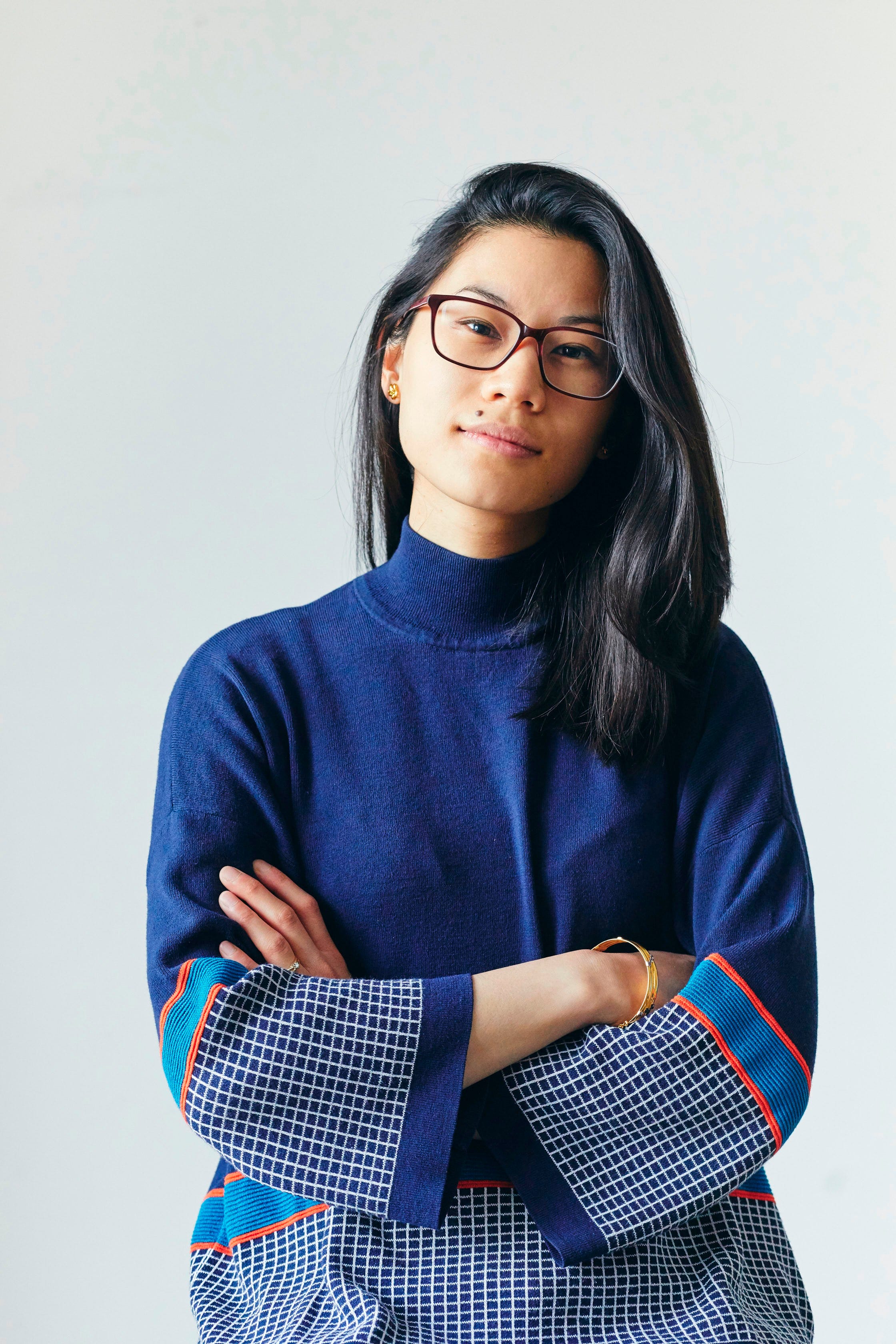
TRJ: In the interview that you did with Simon, you mention Edmund Finnis’s Unfolds as being important to your origin story as a composer. What was it about that particular piece that was so meaningful to you at that moment?
SL: I think it was about his attention to the details of the sounds. Particularly these beautiful glistening textures. He’s got a really strong relationship with the visual arts and architecture. There was an exhibition at the Barbican around that time on Junya Ishigami’s architecture – Architecture as Air – which I was also quite struck by. I think Ed also mentioned one of Italo Calvino’s Six Memos for the Next Millennium, on lightness. So there were all these different sources.
And then with the music itself, there was a lot of energy and these flickering textures, but it was so unbelievably light. There was just so much materiality in there that mirrored those different resources that he was drawing on. I loved how he reflected those things that he was interested in, but also how the sounds were so mesmerising in themselves.
TRJ: From what I know of your music, it feels like what you describe as energy and substance – when there’s not very much there, you’ve taken almost everything away but there’s still that kind of flickering, airy kind of momentum and weight – has been an ongoing aesthetic impulse in your work?
SL: I think that’s true. It’s strange and a bit hard to describe, but I’ve been drawn to the idea of richness and depth and a sense of weight in richness, but not weight in terms of mass. Maybe I’m not so drawn to opaque sounds, but I seem to be drawn to sounds which have multiple layers or internal behaviours, in which there’s complexity within this living thing.
TRJ: Do you start from one of those sounds when you’ve got a blank sheet? Do you find one of those sounds on an instrument or something, and then take it from there?
SL: Yeah, I think often I start with a very tangible sound that I hear in the room. Or that someone’s recorded – for example, on Heather Roche’s blog! [laughs] And then I’m working with something really tangible, trying to inhabit that sound and work from within it. I very rarely come to a blank page with something I’ve imagined, I find that really difficult.
That’s why I love working with players as early on in the process as I can. I feel like the possibilities somehow expand when they’re in the room, and we can see the physical body of the instrument and what sounds are adjacent or contrasting. And we can try what might happen if we do this, or what happens if you catch this string as well, or if you position the bow that way. It’s much more tangible.
TRJ: When you’re collecting those sounds – or, as you say, finding sounds that are in relation to them – what are the most important parameters of a sound for you? Is it the pitch, or might it be the noisiness of it? Or is it something else?
SL: I think my knee-jerk reaction to that question is whether I, in the moment, in a very subjective sense, connect with the sound on an emotional level.
For instance, with Field of Play, I co-composed this with the cellist Natasha Zielazinski. And in those moments, the sounds that stood out to us, for which we were like, yes, let’s keep going with this one, seemed to be the ones where we felt like there was a lot of possibility. Or the focus that it offered: a sense of identity of what it was and maybe a sense that there was more to do with it. So I guess curiosity.
For example, the sound for the ‘seesaw’ miniature: we came across it, and I remember saying, ‘Oh, we could just have a piece of just this sound [made by rocking a cork on the cello’s strings]. Let’s try.’ And then I think we thought about what came to mind, what were the images for us. For Natasha, it was this image of a seesaw, because of how she was manipulating the cork on the strings. Which then influenced the structure. For her, it was like a wide tipping of the cork on the strings, moving towards an even distribution of the cork, like we were walking towards the middle of a seesaw, and then outwards again – this narrative thing.
I think these metaphors or connections to lived experience draw us to certain sounds. But maybe on a very practical level for me as a composer, I am drawn to things that seem to have a clear identity, but also, if they change and are unstable the different versions of the sound are still as interesting.
TRJ: So they have a lot of continuity amongst different versions, a kind of family resemblance?
SL: Like a robustness, even though it is a robustness in their instability, somehow.
TRJ: In the piece for two trombones and harp, sounds which grow richer as they decay, you’ve got the prepared harp that is twanging, and every time it does that, it’s obviously not going to be exactly the same, but it is basically the same.
It sounds to me like your attraction to a sound also has to do with how it is played, and the physical object itself. One of those miniatures uses a hair clip from Natasha’s daughter: that is obviously an object with some symbolic resonance as well. It seems like there’s a whole mix of things going into this thought process.
So I suppose the question then is – and this is something that I ask a lot of people – how do you develop this? What is that process of taking one of these sounds and then making it into an actual piece?
SL: I think it depends on the piece. And also the creative constraints at the start. Writing shadowfolds was very different. That’s the polyphonic piece. It’s different from the cello piece just because there was more of a creative goal that I had to hit.1
That was a very winding process. I got stuck many times, it took several months. I think I restarted the piece three times, just trying to work out the sounds and where they were meant to go. I had a lot of structural issues; I knew I needed lines, and I knew that they needed continuity – and also structural continuity – but I was having problems with continuing the sounds and then also thinking about the balance between ensemble unity as a texture and independence of lines. I felt that I was just writing chunks of material that were really static, and then chunks of stuff that were more linear, and it was a very incoherent piece.
I had to rework it so many times, but once I reframed it enough for it to be satisfying for what I wanted to do with it, I found that what helped was zooming in on fewer sounds that I really liked, and trying to focus all my attention on those sounds and just think, what can I hear? What pitches can I hear within this multiphonic? Can I hear a melody that might come out of it, rather than writing a melody and making the multiphonic accompany it?
TRJ: Bringing it back to the inherent quality of the sound.
SL: I think so. I think that’s what’s important to me. Particularly because I think these sounds are so rich and they hold whole universes within them already. The most natural thing to me is just to draw them out and make them more audible, by amplifying them with other instruments.
TRJ: Is that one of the first polyphonic pieces that you’ve written? You don’t tend to write polyphony.
SL: Yes, I felt very insecure about it. [laughs] I felt like I was hitting a wall and had so much imposter syndrome!
TRJ: Well, we all have that! But what did you learn from the process?
SL: I think singing as a method of creating. Improvising is an important part of the creative process anyway for me, but I think singing in order to stick with lines and follow them was helpful.
There was also a question about my method of composing, about whether I write straight into Sibelius or start with instruments and improvise on them. I used to think one method was more helpful to me than another. But actually, I don’t think that’s true so much. The middle section of shadowfolds, where there’s a duet between the piano and the vibraphone, was written directly into Sibelius. I think what actually helps me in the process is just clarity and obsessive single-mindedness2 in working with and refining material, rather than how I get it down or where it comes from.
TRJ: It’s interesting you say that singing was, was so important as the way to manage line. Why do you think singing works when, say, piano wouldn’t work so well for you? Is it to do with the physicality of it, or is it something else?
SL: I think so. Yes, with breath as continuous. I think also in the context of that piece, there are lots of glissandos, and I guess it was more practical to sing rather than play the piano. Also, I feel like singing … I work on Logic Pro as well, and I record things and then listen back to them. When I’m trying to add layers and trying to create an environment for the piece, the most direct way to do that is by singing.
TRJ: Listening to your music, it feels very acoustic, very handmade, and it lives with the imperfections of that. That seems central to what it is. But you’ve mentioned now both Logic and Sibelius as being part of your creative process. I’m intrigued to know what the process looks like of going from playing around with a cork on a string to then going into the computer, and then coming out again with something that still sounds like it’s handcrafted. What does the software allow you to do that you want to keep in that process?
SL: I think the software for me is purely for the sounds. I use Sibelius in the process more often just to hear what’s happening. Because above all what I want is direct contact with the sounds, making them as tangible as I can.
So for instance, with shadowfolds, I didn’t really have access to most of the players during the process, so I needed something that would allow me to hear what I was composing. And because some sections were more pitch-led, I didn’t want to do that in Logic because of my limited skills.
But this humanness that you talk about … Right now, I am trying to finish up the scores for Field of Play. Everything’s handwritten because we are composing together in the room. Things like the form of the piece or details of how to produce the sounds are very embodied and unwritten. Or there’s just a really rough diagram or a coloured sketch or a picture, like a little drawing of a finger pointing down. [laughs] Something like that, very light, just what we needed to remember what we were doing.
Now going back into it to write the score, there seem to be tables of things, which I’m not sure is the right way to go about it. It seems too formalised, but at the moment as a work in progress that’s what it looks like. For one of the pieces, ‘hidden place’, there’s a table of six different kinds of sounds with descriptions of how to make them sound and what we’re aiming for. And then we filmed little videos of how to produce the sound.
It’s hard because it seems so rigid in its appearance. But it’s a piece that’s driven by curiosity, and we’re trying to nurture the player’s own relationship with their sounds. Trying to explore potentially different types of the same preparation. They won’t have access to the hair clip, for example. They need other hair clips, different sizes, different numbers of teeth. Working out what the priorities are takes some time, but I think there is a tension in trying to capture the variabilities of it and framing that as a really positive, searching thing while also communicating that these were the things that we were interested in that we found. And maybe within that dialogue somewhere, there will be sounds that the player might find that are different or more interesting, or that suit them and their own methods a bit more appropriately.
TRJ: It sounds like a process that admits a lot of variation, or potential variation. Is that normally the way that your scores end up? You start from a very particular sound that interests you: how insistent are you that that’s the sound that ends up getting made?
SL: I think the sounds tend to be quite specific. Again, it depends on the piece. I feel like there are different strands of my practice. It’s always about the detail of the sound, but with varying degrees of openness.
Making these scores, I think the sounds tend to be very, very specific, and maybe it’s the form that tends to be more open. The exception is things we overheard. The players for that one choose their own sounds. So I’m starting from a different place with that one.
TRJ: Is that the piece where they are listening to field recordings and responding to those?
SL: Yeah.
TRJ: So how does that work?
SL: It’s a cue-based score, and it’s mainly a text score. Each player is listening to a different kind of recording. So there’s one with traffic noises, one with water ... And there’s a soloist and a little ensemble. The soloist is given these bell sounds.
They’re all recordings I made on a walk. I just walked around the neighbourhood one day. The players are collectively recreating an environment, these different layers of sounds. The soloist’s material is a bit more prescriptive, in that there’s an invitation to choose some specific pitches, but in different octaves. And to alter those colouristically. And there’s one player in the ensemble who doesn’t have a field recording, but they’re listening to the other players and choosing to echo and translate what they find interesting. So in a way, there are different layers to things that they’re overhearing and where those sounds are coming from.
There is a loose form in that there’s an order of things and when they come in, but they are cued either by the track that they’re listening to or each other.
TRJ: Let’s talk about the subject of your thesis, which I acknowledge is from a few years ago now, but I have an ongoing obsession with decay and resonance as a kind of musical material. I wonder if you could just outline for me what the idea of decay is musically for you, and what kind of expressive resonance it has?
SL: I think I was interested in dynamic processes of decay. It seems like with my doctorate, that’s where I landed. More in exploring different relationships within decay: things which grow out of decay, or growth in spite of decay. I was really interested in the visual artist Anya Gallaccio, and her work with rotting flowers. Her work was really interesting to me because before it, I was interested in decay as absence or emptiness, but with her work, there was something quite gritty about what happened as a result of the process.
It also raised questions of control and collaboration with your material – not knowing what would happen as a result. Which I thought was really interesting. I was also drawing on wabi-sabi aesthetics, particularly the idea of earthiness, and the idea that you can find materials that are raw and unrefined and in their natural state. I think Leonard Koren talks about it and how it shows minimal craftsmanship.
I guess I saw my role as a composer as finding these timbrally rich sounds from instruments that were raw and that came with their own properties. And what those can and can’t do, what their possibilities are. That was why I was drawn to those sounds. I guess I was taking decay as a poetic framework for my pieces. The kinds of things I was writing at the time were very overtly exploring the idea of decay – like the piece that you mentioned before for two trombones and harp.
I was really interested in an article by Linda Sandino on how rust is an active thing, like the object is living, and we see the history of that object lived out through rust. I really liked that parallel in sound. I was also looking at mould and coral bleaching and all of that.
But then towards the end of my doctorate, I found, again, an issue with form. I was placing too much emphasis on … maybe not narrative necessarily, but the conceptual framework. I was trying to communicate something very specific, but it often went against what the sounds wanted to do. It felt like too much of a burden to place on them. And so, increasingly, I tried to locate the exploration of decay on a much more abstract, behind-the-scenes level. I became more interested in letting the sounds be the whole thing and being led by what the sounds were doing. Which is where I am now, I guess.
Decay and fragility are still important to me, but they come as second nature. They’re buried under the ground, and I’m on the surface, just hanging out with the sounds. Occasionally one or two of my pieces will have this offshoot from the ground that’s very like, ‘Oh, this is definitely about renewal and transformation and decay’, but when I’m writing the piece I’m not really thinking about those things explicitly. I’m just following my nose a little, with the sounds.
TRJ: Can you give me an example of when you were using sound too specifically for a kind of a narrative, and that moment of stepping back and saying no, let’s make it more abstract?
SL: There were maybe two pieces that didn’t really work so well. There was one about coral bleaching. I think I was just trying to depict something. And by depicting something, it led me to think of forms that were of a particular kind, maybe reiterative or maybe with more landmarks for listeners to latch onto. But it didn’t need that, and it was quite distracting.
I think I’m after forms in which there’s a sense of formlessness, or there’s a sense where it’s more like a space, or we move on from one thing to another without knowing or maybe knowing in hindsight. I think that’s what I’m aiming for nowadays, more flexibility. I don’t necessarily want the listener to know unless it’s for a very specific thing.
I reworked that piece as an electronic piece. I had recorded workshops with the players. There were snippets that I really liked, and I thought, why can’t the piece just be this thing? We just did that instead, and it was way better! [laughs]
TRJ: In your conversation with Simon, you relate these ideas of decay to your experiences of migration. And I’m really interested to hear more about how you’ve explored that idea.
SL: Again, I think it’s relating to past pieces.
I think part of moving from Sydney to here meant that I was just thinking a lot about home, and the significance of places that were meaningful to me. And around the time I was listening to Ed Finnis’s Unfolds, I was also encountering artists who really resonated with me, like Do Ho Suh, who has these light switches and a gate that he grew up with, but it’s hovering really high up in the ceiling and it’s made out of this really translucent fabric. They’re these memories of home, but isolated from their context – sort of carrying bits of home with him in different exhibitions.
And the same for Shi Jindian, who I think had motorcycles, but he’s covered them in mesh and then extracted the object, so we’re just left with a shell.
I was writing pieces about using those processes. There was a piece in my second year of undergrad about a place that I used to go to in Australia called Collaroy Beach that really stuck with me, and I loved it so much. I also found this anthology of poems by Amanda Dalton called How to Disappear, and the piece drew on one of her poems about place. I was just connecting all these different references together. Maybe it was a way of processing what was happening for me personally.
There were other artists as well. I feel like I often go to visual artists as a way to make sense of what’s happening, in the way they work with their materials and in their creative processes as well, and how they make something happen.
TRJ: Is that still the case?
SL: Very much so. And also writings by other people.
On the migration thing, for my master’s, I also wrote a piece called landscape fragments. I wrote it for EXAUDI, who workshop and perform the master’s vocal pieces at Guildhall, which is amazing. The text was formed by my home addresses from across my life, but filtered so they were not so public. But some of the addresses are quite poetic, actually. Putting them together, there was some sort of poetic depth that drew me to that text.
But, in terms of migration, I’ve been here for sixteen years now, which is a really long time. I still really miss home. And maybe now it seems to be me reading poetic essays by people like Jessica J. Lee; she has a book called Dispersals: On Plants, Borders and Belonging that I really love. And also Nina Mingya Powles, who is from New Zealand with Chinese-Malaysian heritage, and she writes about food. I really love food, and I want to explore that in a piece somehow. I just don’t quite know how to do it yet. It would be a really different expression.
I was also reading Tender Maps by Alice Maddicott. Reading that book made me increasingly aware that atmosphere is really important to me. An atmosphere from place. Maddicott talks about atmosphere as a collaboration with place; I really like that. Reflecting on that in my pieces, I think with each one I write, there is – hidden somewhere in my subconscious – a particular atmosphere that is suggested to me through the sounds that I’m trying to lean into and communicate and make tangible.
Sometimes these atmospheres are imagined spaces in which I’m thinking about artworks, or memories that I’ve had encountering artworks. So flare, for instance, the piano piece, all throughout that process I had this sense of submergence and resurfacing. I kept coming back to a Bill Viola exhibition at the Royal Academy. There was this huge room with his massive video installation, Five Angels for the Millennium. Huge screens of underwater slow-mo, beautiful, dark videos, and then every now and then there would just be a person emerging from the surface with lights. The atmosphere that that created in the room for me was so impactful. That’s what stayed with me and is what coloured that whole piece for me, even if it wasn’t specifically about it.
TRJ: I love that idea of atmosphere being a collaboration with place, because it strikes me that place, in a slightly abstract way, is quite important to your music.
Obviously there’s a piece like things we overheard where there are literally field recordings of a place, and then your own life experiences, but also the idea of instrumental resonances being, in a small way, to do with place as well. And it seems to me that sound is also a collaboration with place.
Sounds don’t exist in this abstract vacuum. That was a thought that struck me when listening to your music, and I wondered whether you have thoughts like that when you’re writing it or even listening to it.
SL: I liked what you were saying about the instrument as a mini location. I think that’s so true: the instrument as an ecosystem or an environment. There are just so many factors in creating that sound.
I was reading your interview with Timothy McCormack and Marco Fusi, and I
love the way they articulate what’s happening in the room with the sounds. And I really resonate with that. I feel it’s very close to how I think about sounds too, just the physicality of it and what’s happening in all the different parameters or zones.

The second thing was that I think the room in which I am working, and the atmosphere of that – that really affects what’s happening.
Field of Play, for instance, was a very different setup. We were really lucky to receive some research funding that meant we were able to dedicate more time to it. I would meet Natasha in her home to do workshops. The fact that we were in someone’s home was just really different. There was warmth and hospitality, and it meant we could take afternoon walks and make lunch. The first thing I did whenever I got there – because it’s quite a long journey for me – I would just collapse on her sofa, and she would give me tea. Often we’d have pastries, and that’s how we would start our sessions: we would just chat about what’s happened in our lives and then gradually think about what we were going to do that day. We’d spend a couple of hours there each day with her instrument, doing the work.
One could say, if one were trying to be super efficient, that you could do that in a studio and be done with it really quickly. But I don’t think we would have created the same kind of work. I think the friendship and that space really shaped what we were doing and how we were communicating. We felt like we were able to bring our whole selves to the creative process and share and build a shared language from what we were saying about our lived experiences or what our hopes were for our project together. Also, just the way we were communicating these thoughts … we did a lot of drawings and mapmaking in terms of how we understood the sounds. And there was a vulnerability to that, I think.
TRJ: The idea of making maps, as a way to understand the sound, as you describe it, is similar to what I was asking you before about the parameters along which you understand sound. Presumably that fed into those maps? I’m guessing that Natasha’s maps were not the same as yours … so what were your reactions to each other’s maps?
SL: Really fascinating. For one of the maps, she drew this circular thing. There were different objects and colours in a circle, and this spinny arrow thing. And she said, this is how I see the piece: it’s tipping, and we’re landing on different sounds. This kind of motion is how I’m approaching it and how I’m seeing the relationships.
And then for me, I had a network map of, like, third string, microphonic. It was a very literal family tree of the sounds and how you can access other sounds; it was like a branching. It was just really pragmatic.
But for me, that was important because it was an overview of where we were and what the landscape was and what we could do.
It was interesting seeing how both our brains worked and also what we were prioritising in our listening, or what we were thinking about at the time. But it also shows how knowledge exists in different ways.
But also, because we were really interested in this salad and soup making, we also wrote these little recipes for how we navigated the creative process. So we wrote down what kind of questions we might ask ourselves, but as a way of documenting rather than doing it in the moment.
We were having a very open dialogue, sharing our emotions very openly. We were building on each other’s enthusiasm and trying to find a way to remember what we had done.
TRJ: Had you worked in very close collaboration like that with a performer before?
SL: Not to this extent. I think that’s the kind of energy I try to bring to workshops, but sometimes it’s a different dynamic when you’re doing that with a whole group of people at the same time. But I would like to do that more. It’s so different, isn’t it? The structure of developing a piece in that way is so different from what might be on offer from an ensemble. And it’s tricky to work out how to navigate that.
TRJ: You were talking about the idea of atmosphere and trying to capture that, or use it as a context for the work. Obviously, in those meetings you were having with Natasha, it’s clear how that works. But presumably when you’re sat in your studio or when you’re doing a three-hour workshop with an ensemble, the atmosphere is a little bit different. How are you kind of trying to get that into the work when it doesn’t come as naturally?
SL: I think when time is tight, I rely much more on what I’m recording. I record the whole workshop anyway. But then that reflection time after the workshop with just me and these sounds, and I’m just logging what’s happened, that time is really important. I think that happens at home, but it happens in other places too. Then it becomes less about the physical place for me and more about the sonic place, or the imagined space. Then I become much more attuned to the atmosphere of the sounds, and I kind of shut off. I put my blinkers on, go inwards, and then think about the spaces of artworks or places where I’ve been before.
TRJ: Yeah, it becomes much more of a memory, or memory plays a much bigger role in it.
SL: I think so, yeah.
TRJ: Continuing on from this idea of fragility that you talk about in relation to your more recent pieces, I was also looking at the little programme note that you wrote for your Tectonics piece, Moss that holds. You talk about moss and cracks, and the kintsugi thing of sticking broken vases back together and leaving the marks in there.
And it made me think that the idea of resilience is fundamental to that as well. When we say resilient, we often think of strength and solidity, but perhaps the resilience that you’re looking for in your music is different. I wonder if you could say a little bit more about that?
SL: What I liked about moss was that it’s a soft covering over cracked spaces. It’s soft, gentle and gracious – the crack might be big, but over time it covers over. There is a hopefulness to it, but also something understated about it. A lot of this thinking came from reading a chapter on moss in Lee’s Dispersals.
So thinking about resilience in Moss that holds, it’s like a soft, comforting resilience. Like an invitation to sit in warmth, looking for hope, while we are all too aware of the cracks. Rather than being already resilient and strong. I think wrapped up in that is a sense of tenderness, maybe, and gentleness. Maybe that’s linked to the kinds of sounds that I’m drawn to, but it’s maybe also to do with people and the ways that I’ve seen other people care for others, and how I’m struck by that. Also, for me personally – although the piece is not explicitly about this – it is privately linked to my own experiences of where I find my own hope, which is in Jesus, and the kind of tenderness that is shown there.
But also maybe just in terms of the natural unfolding of my pieces, perhaps it would feel too contrasting or too jarring if it was a bit more opaque or more persistent. I say that, but maybe I should try harder! [laughs] For instance, with that orchestral piece, just thinking formally, the opening comes back in bigger force. It’s a very strong recapitulation, Tim! I don’t know how I feel about it! [laughs]
But my intention is that even though it’s more fully orchestrated and it’s thicker, it’s also richer and deeper and maybe more present. Maybe it’s about presence, rather than anything else. Yeah, it’s warmth and intimacy. There is some intensity behind it, but I hope that that’s of a friend revisiting you rather than something very climactic or dramatic in its entrance. Although I do think it comes back quite climactically in that piece, actually. Because in my lived experience there was a sense of a yearning for it, and that ended up coming through in the structure!
TRJ: It’s an emotional space that I hear a lot of composers in at the moment, particularly, I guess, composers of your generation. You mentioned Timothy McCormack as an obvious example, but do you have a thought as to why that might be the case?
There may be very obvious answers to that, but it does seem like it’s also to do with a wider opening up towards composer–performer relations. Not so much, ‘I’m the composer, I do this; you’re the performer, you do that’. And then once that gets built into the music, you get a much more nurturing kind of emotional space
SL: I sense this thread as well. I feel like it’s something I need to think about more. But there is maybe a sense of ... It feels like there’s more freedom to do that, but also there’s a way … I hear people talking about metamodernism a lot.
You know, I really admire Oliver Leith’s music or Robin Haigh’s music, for instance. And there is a lot of emotional intensity in that, but the way it’s presented sounds really refreshing; it’s like there is permission to share. Not that we need permission, but I feel like it’s okay to write these emotional passages, but in a way that feels of our time.
TRJ: It seems like there’s a greater space for vulnerability, maybe.
SL: Yes, I think so. And then also, I’m thinking about the Wandelweiser composers and their approaches, very diverse approaches within them, about gentleness and tenderness, and also that thread coming through in caring about the player’s experience and centring them. I feel like that dynamic is really important too: of, yeah, vulnerability, but also a joint searching for things that are important. And I know that’s linked to a hopefulness of what communities could look like as well. Aaron Lockhart’s ending.beginning.interludes and Georgia Denham’s kindly, softly were also huge influences on me as examples of music that explores graciousness and care.
But maybe, for me anyway, I feel like it’s all of these different things in the atmosphere that mean that I feel very comfortable being able to dip into things that might feel a bit more, maybe not personal, but leaning into that kind of expressiveness. And that’s okay.
shadowfolds was commissioned by Reynell, who suggested Lim apply a more polyphonic approach in this piece.
Lim notes that her thinking here owes something to the composer John Croft; see Croft, ‘On working alone’, in E. F. Clarke, M. Doffman (eds.), Distributed creativity (Oxford University Press, 2017).