Purposeful Listening 9
forest/trees, time/space, glitch/tone

Tomorrow will be the hundredth birthday of the Hungarian composer György Kurtág. I’ve written a sort-of birthday tribute for Bachtrack, in the form of an interview with Pierre-Laurent Aimard, one of his longest and most devoted performers. It includes a great behind-the-scenes story about the premiere of Messages of the Miss Late RV Troussova, the work that more than any other launched Kurtág’s international reputation. It involves a fastidious composer and the search for the perfect sound of breaking glass; budget-nervous ensemble managers should look away now.
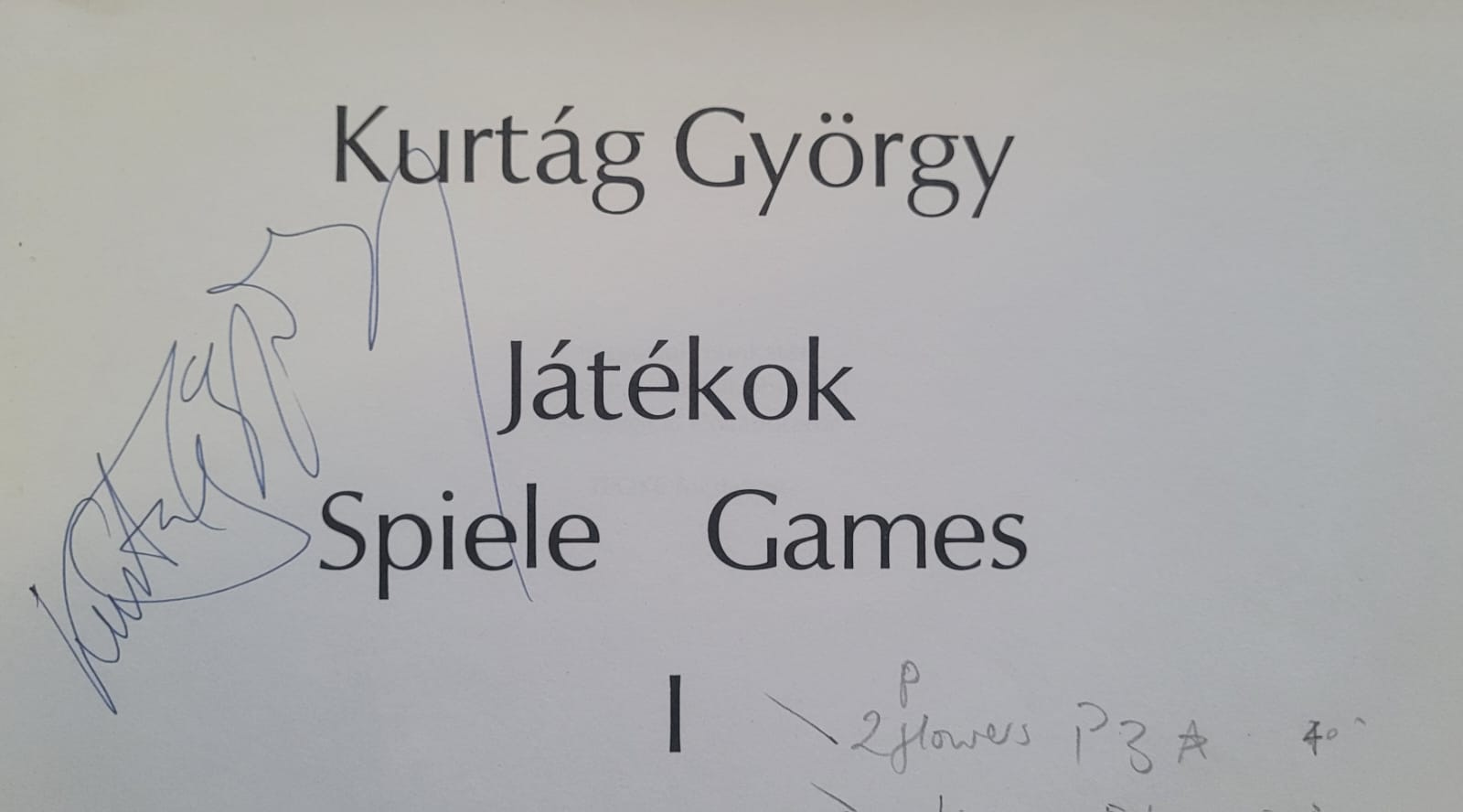
But beyond that, I wanted to say a little more about Kurtág here. Because more than Feldman, even, whose centenary was celebrated last month, Kurtág’s music set me on the path I am on now. Not, I would say, necessarily because I like Kurtág’s music more. There are some pieces that are incredibly special to me – the Játékok recording he made with Martá for ECM; …quasi una fantasia…; Grabstein für Stephan; STELE; Messages of the Late Miss R.V. Troussova – but there are equally plenty that I have never got my head around. And there are long periods of time when I don’t think about Kurtág’s music at all, which is not true of Feldman’s, which is never very far from me.
But Kurtág has represented a more consequential fork in my road. I think my first encounter must have been the ‘score’ – really just a bar of music – to the first of the twelve microludes for piano, from Book 2 of Játékok, although I have no idea now where I would have seen this. Really no more than a gesture, it captivated me with its size; I doubt I’d seen any music on this tiny a scale before. A middle C, followed by a three-note cluster spanning the notes on either side. Ludicrously simple, but somehow also sufficient.
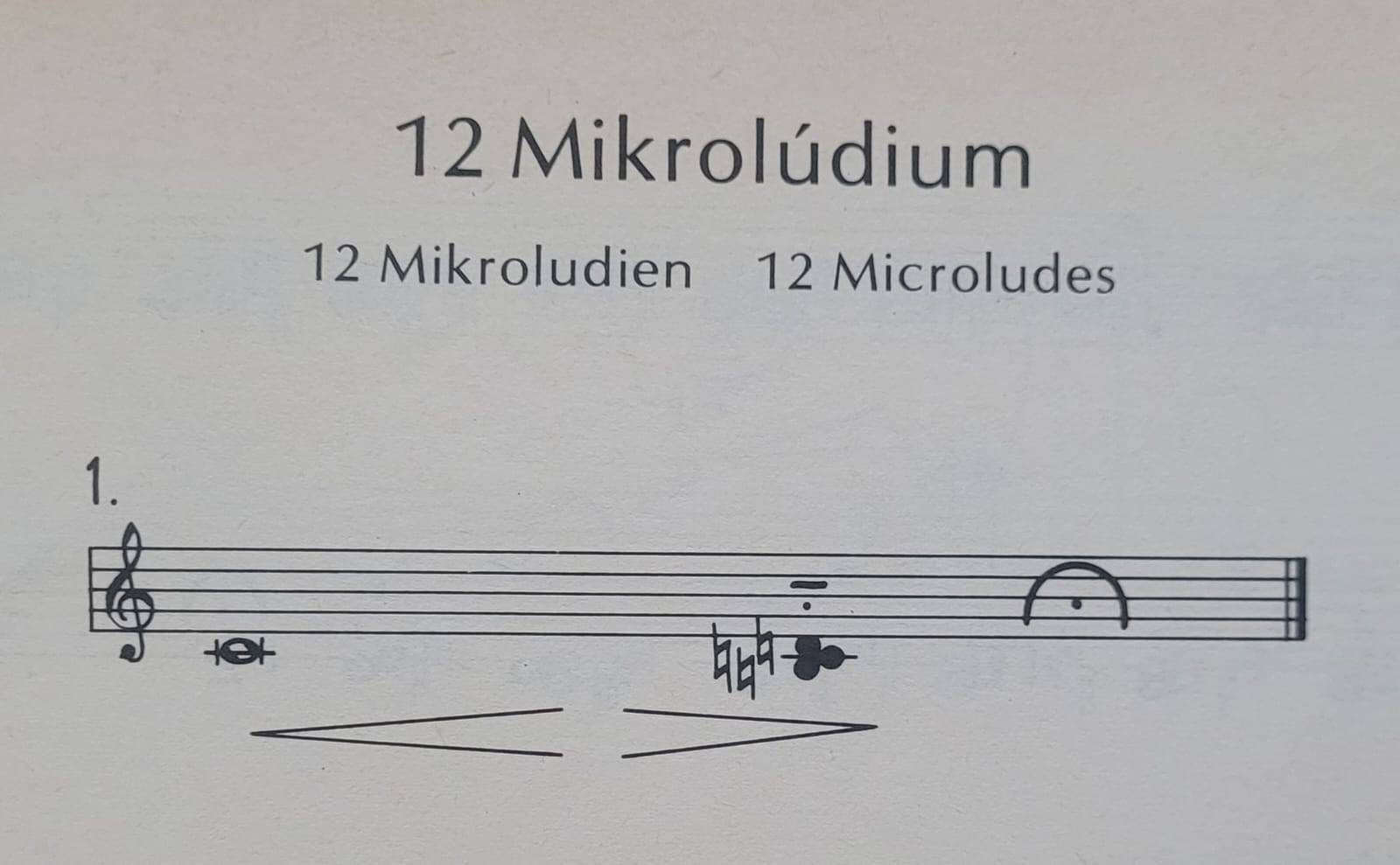
And also crazy: look at the hairpins! A crescendo underneath a held note? Physically impossible on a piano, which knows only how to fade, not grow a sound. Yet it is practically the music’s only expressive marking, and with so little else going on, it has to do a lot of work. Once again, everything in this music is in the decay – only this time, that decay is doing the inverse of what the music wants to be. The performer must work against the objective physical properties of the sound, but with its subjective insistence. How they do this is up to them: they can’t play the crescendo literally, of course, but they do have resources with the pedal, with the touch and timing of the cluster, and with physical movement (if in front of a live audience). But the point – and this pertains to almost all of the Játékok’s hundreds of miniatures – is that there is much more to the music than simply the notes on the page. (There are dozens with impossible dynamic markings like this.) As Kurtág writes in his preface to the collection, ‘On no account should the written image be taken seriously, but the written image must be taken extremely seriously as regards the musical process, the quality of sound and silence. We should trust the picture of the printed notes and let it exert its influence upon us.’
Anyway, my mind was captured, even if my ears had not yet heard a note. I got hold of the ECM/Keller Quartet recording of the string quartet music. This included Ligatura – Message to Frances-Marie (The answered unanswered question), whose transcendent, surreal coda (three rising celesta chords that appear magically from nowhere) cemented my interest. And on a university orchestra visit to Budapest a year or two later, I bought up as many Kurtág recordings as I could find (including the Adrienne Csengery Kafka-Fragments) and spent a large part of the coach journey home sniggering childishly at the seemingly bizarre translations of János Pilinszky and Attila József in the liner notes (‘A trouser leg falling in darkness’).
By now I was pretty hooked, and when it came to choosing a topic for my master’s dissertation, it could only be the Játékok. And a few years after that, although Kurtág himself was not the subject of my PhD, my focus on Hungarian and Polish music of the 1960s and 70s was largely down to him, and that Budapest trip. And so here I am. Boldog születésnapot, Gyuri!
CD reviews

As promised two weeks ago, I’m catching up on a few more CDs this issue. After this, however, you can expect a great run of interviews: in the next couple of weeks I’ll be speaking to Timothy McCormack and Marco Fusi about long-duration music, performing bodies and Tim’s 45-minute viola solo, …stretched across its axes, which Marco will be playing at City University on 24 March; Juliet Fraser about programming, curation and her eavesdropping festival, which takes place this year on 19–22 March at Cafe Oto; and Bastard Assignments about their new music theatre piece PIGSPIGSPIGS, which will be staged at Wigmore Hall on 11 April. I’m looking forward to sharing all those with you.
The first two releases discussed below are already out; the Branciforte/Dumoulin will be released on greyfade as a ‘multi-disc object’ and digital download on 17 April. Readers in London might also be interested to note that the two musicians will be appearing (alongside Scanner) at Rich Mix on 20 March.
Richard Barrett: close-up (Sargasso)
Arriving at the end of last year, close-up is the inaugural release in Sargasso’s projected Richard Barrett edition of recordings. Barrett has been prolific in recent years, so while he is already fairly well represented on disc, a dedicated avenue to keep up with his output is a welcome development. close-up was composed between 2013 and 2016 for Serbia’s Ensemble Studio 6, and like many of Barrett’s works it is a cycle of interlocking smaller compositions that can be performed separately or together. (For those who are interested, the full score can be viewed via Barrett’s website here.)
Since 2013, Barrett and Milana Zarić, harpist and artistic director of Ensemble Studio 6 have maintained a close artistic (and personal) relationship: Barrett has written several works for Zarić (including the harp and electronics duo tendril with which close-up begins); they perform together; and they co-run the digital label Strange Strings. The seeds for close-up were sown during Barrett’s first visit to Belgrade, when Studio 6 gave a performance of his collective improvisation work codex I (originally composed in 2001), and a plan emerged to incorporate this and a new work in the codex series, codex XII, into a larger work-cycle.
close-up follows other works in Barrett’s output of the 2010s – notably the hour-long life-form for cello and electronics, which I reviewed back in 2017 for Music and Literature (and which provided the inciting moment of my whole Schubert project) – in focusing on natural forms, structures of life, organically derived processes and relationships. I choose those words carefully: inspired by the natural world though close-up is, I mustn’t give the impression that Barrett’s music evokes, Messiaen-like, the sounds of nature itself. There is no birdsong here, no rustling of the wind, no washing of the tides.
Like Liza Lim, a composer with whom he shares (via the ELISION Ensemble) an extensive creative history, Barrett takes an analytical approach to nature. Straightforward imitation is of little value. (If you want to hear a lyrebird, you’re better off going to the zoo.) What is of value is how the processes of nature can inform musical practice; and, as musical practice in turn inform social practice. Barrett composes musical ecologies: landscapes of niches and needs, symbioses and cohabitation. To make a crude, but hopefully instructive analogy, this is one way in which his cycles of work operate: extracted from the cycle, a given piece can serve on its own, like a specimen; but returned to its ecological context it becomes more than this, a node within a network, whose presence impacts upon and is nourished by its setting.
Forests appear to be particular stimulating environments for Barrett. One of my favourite sections of life-form, and an image I return to over and over, is its third movement, arboreal, whose electronic track models the way in which rainforest species organise their calls so that they each operate in different parts of the sound frequency spectrum. As the cello cuts a path through this dense environment, the electronics adjust in real time to make ‘space’ for it within the overall sound. The electronics/rainforest comprise therefore a kind of global steady state; but one that also flexes and reorganises in response to an external stimulus, just as any natural environment will. The point of view established is therefore a complex one: one listens from the point of view of the cello, pursuing (almost indifferently) its heroic melodic path; but one also listens from the point of view of the forest, making way, adjusting, accommodating. This perspective changes how we hear the cello, which changes again how we hear the electronics … and so on. Life is not competition, but endlessly reconfiguring cooperation.
close-up takes us back to the woods. It emerges, says the composer, ‘from the multisensory image of passing through a forest, or some other richly biodiverse environment, and viewing it from many perspectives, from the smallest details to the whole; now an almost microscopic insect making its way across a translucent leaf, now an ancient tree whose summit is almost out of sight, all of this forming an unfathomably complex dynamic unity’. Part of what this means – in almost all Barrett’s music, not just here – is the creation of sonic environments or states, in which one can stay for a while, looking, exploring and getting lost. By no means is Barrett’s music minimal; but it shares with minimal music a spatial interest. But whereas we might say that the succession of rooms in, say, Music for 18 Musicians are architectural, empty, inviting the listener to fill them, the spaces in Barrett’s music are made out of the things that fill them, out of which one might infer a surrounding geometry. You see the trees first, and then infer from them a forest.
Four movements of the cycle point explicitly to different natural phenomena: tendril, pauk (‘spider’), nachtfalter (‘moths’) and šuma (‘forest’). The last of these is a further composite work, comprised of six solos (instar, calyx, cyme, spore, tegmen and epiphyte) for recorder, trumpet, harp, accordion, cello and electronics. While none is strictly representative, one can imagine the jagged, spiky movements of spiders in pauk’s staccato accordion and muted trumpet; the dusty, nocturnal fluttering of moths in nachtfalter’s trio of harp, cello and alto recorder; and of course the diversity of forest flora and fauna going about their business in šuma’s interwoven solos. tendril, though, seems most poetically evocative, the glissando sweeps of the harp – counterpointed by Barrett’s electronics – strongly suggesting the curling, probing growth of vines across the forest floor, perhaps even reaching into new spaces to root and found an entirely new arboreal system.
Between these, the two semi-improvised movements codex Ia and codex XIIa1 are more abstract in their relation to forest, but perhaps do most of the forest-performing, as it were. Where the named (and more full notated) movements point to specific phenomena, viewed in close up, the two codex movements introduce a global perspective: the ethical economy of interdependent life-forms, negotiating and co-habiting. If one wishes to continue the organic metaphors, the two codex movements represent kinds of less cultivated (but no less coherent) forms of organisation.
As ever with Barrett, there is a lot – almost too much – to get one’s teeth into. I find often that listening to his music is a three-stage process: there is a seductive surface, novel, interesting and exciting. Then there is the (over-)abundance of theoretical and metaphorical underpinnings, some of which I have touched on here; this phase is usually the most challenging and the most disorientating. But then, with a bit of persistence, one pushes past that and arrives at a new clarity. The theory doesn’t go away, but somehow the music takes over and makes the same point more clearly and more acutely. This stage really is worth the effort, but I won’t pretend it comes easily, or on a first listen. As I write this, with close-up I am mostly somewhere between stages one and two; I look forward to living with it longer and discovering those deeper depths that I know are in there.
1984: The Forward Process (Dropa Disc)
1984 (the Orwellian inference is deliberate) is Belgian guitarist Kobe Van Cauwenberghe’s new trio with turntablist Mariam Rezaei and saxophonist Sakina Abdou. Readers from the old place will remember me raving about Van Cauwenberghe’s recording of Anthony Braxton septets a few years ago.
For this album, which features a mix of compositions by Van Cauwenberghe and the group, the trio take inspiration from a line in Ursula K. Le Guin’s classic sci-fi novel, The Dispossessed. (Their track titles come from places, ideas and characters in the book, too.) On the desert planet of Annares, a composer introduces himself to the young physicist Shevek, whose life work is a new theorisation of space and time. ‘I’m writing a piece of chamber music’, says the composer.
Thought I might call it The Simultaneity Principle. Five instruments each playing an independent cyclic theme; no melodic causality; the forward process entirely in the relationship of the parts. It makes a lovely harmony.
This image makes me think immediately of the ‘mobile’ (vs ‘tree’) conception of music I wrote about in PurLis 1:
For tree, think Ligeti, or Grisey: music that defines its terrain progressively over time, discovering and developing as it goes. For mobile, think Feldman or Reich: music that defines its terrain at once, making discoveries by progressively altering or rotating.
But this would be a mistake. The music 1984 make is nothing like that; or nothing like I would expect that to sound. It is considerably more fluid, much more surprising.
There is mobile-ness in it, of course, and an absence of melodic causality, at least overtly. But one does not have the sense of receiving everything at once; one always has the sense that there is more to be revealed – to players as much as to listeners. And so the music has a momentum: in the stepping out and joining in of parts, in the (?accidental) arrival of communal gestures. It contains a past – with turntables, how could it not? – and a future – in the exhalation of breath to pass across reed and out through a saxophone’s bell, how could it not? In between, Van Cauwenberghe’s guitar: instantaneous, present. What lingers in the memory is the movement of individuals, around and through each other; a creation and negotiation of time and space.
Joseph Branciforte and Jozef Dumoulin: ITERAE (greyfade)
Prolific producer Joseph Branciforte founded the greyfade label in 2019 on the premise of ‘a music release as a complete conceptual universe, integrating sound, compositional architecture, visual design, and text into a single object worthy of sustained engagement’. Wearied (but persistently compelled) by the convenience and intangibility of streaming, this is a view I have a lot of respect for, even if I am not necessarily disciplined enough to fully participate in it in my professional or leisure time.
Such a philosophy is intended to resist the aesthetically deadening (and financially crippling) effects of virtualisation on the business of making and selling records of experimental music, but Branciforte is no Luddite. Greyfade’s aesthetic, encapusulated in the gorgeously crisp designs of its record sleeves, holds in tension both digital and analogue realms. Just look at this:
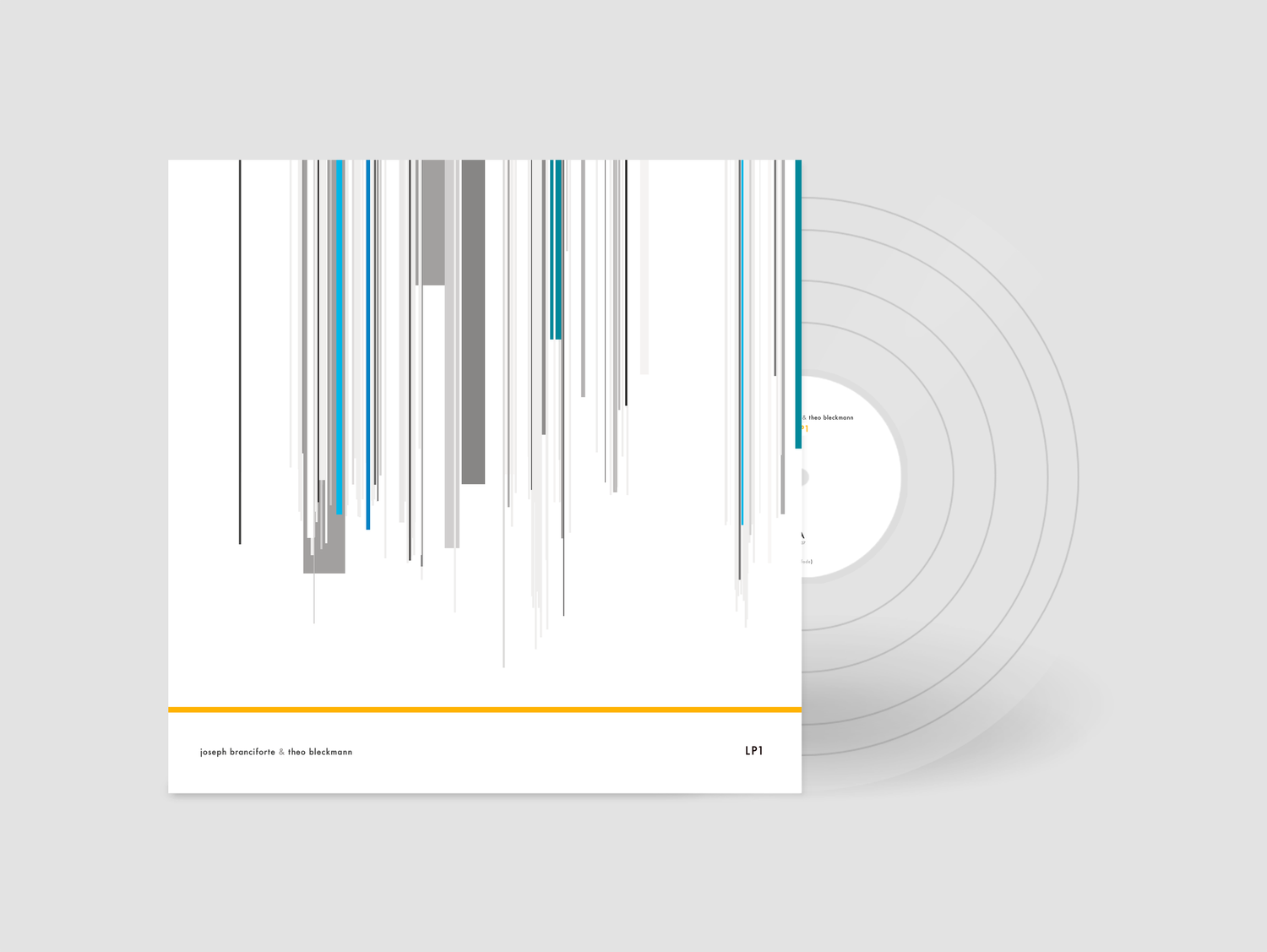
That tension spills over into the recordings themselves; in 2024, greyfade released Branciforte’s transcriptions of Kenneth Kirschner’s digitally composed July 7, 2017, played by cellist Christopher Gross. The release took the form of a hardback book (with QR codes inside to access the music), thus neatly straddling that same digital-analogue divide.
For ITERAE, Branciforte has worked with Belgian keyboardist Jozef Dumoulin for a series of improvised duos on a pair of Fender Rhodes pianos. If that makes you think of Herbie Hancock – The Wire’s Philip Watson had the same thought – you would be wide of the mark. Hooking their Rhodes up to an array of live processors and effects (as well as Branciforte’s custom live editing system), the pair produce a delicate, post-glitch music of the spaces between crackles and static; and the crackles and static between tones.
This is a really rich and compelling record. The glitch thing does carry noughties echoes of Fennesz, Pan Sonic, etc; but there is a distinctly human undercurrent here, a burbling, almost pastoral tenderness to some of the sounds. Branciforte and Dumoulin do not indulge in that fetishisation of technology that sometimes afflicts glitch music, but engage with their machines and circuits openly and playfully (note the occasional jazzy flourishes, when they let Rhodes be Rhodes). At the same time, there’s a darkly ambient quality that reminds me of klein’s sleep with a cane from last year, or even Space Afrika’s Honest Labour, two albums that really do capture the mood of the times. A lot of thoughts going on here; that Branciforte and Dumoulin allow them in, while keeping their music on a tight thematic leash (their album’s spirit of understatement is one of its strengths), is all to the good. Don’t miss this.
Words elsewhere
In addition to the interview mentioned above, in celebration of Kurtág’s centenary tomorrow, I’ve written some programme notes for this superb-looking concert with the Philharmonia Orchestra and Víkingur Ólafsson, featuring works by and around the Hungarian master …I’ve also put together chunky programme essay for the Aspen Music Festival and School, on recent American music … further programme notes for the LCO’s performance of scores by the late Jóhann Jóhannsson … and a short essay for Norient responding to this conversation with the Moroccan composer Ahmed Essyad.
The additional a in each title indicates a version for fixed, rather than open, instrumentation for the purposes of the close-up cycle.
What a great column! Love Kurtág, have that Adrienne Csengery recording. Have to make it to Budapest someday (at the very least to visit my great-grandfather Géza's grave.) And Joe Branciforte's work is imbued with such a precise and refined sensibility.